Featured

FIONA BARNETT WAS RIGHT

Over a decade ago, I became the first victim/whistle-blower to publicly expose Australia’s role in a government-sponsored child sex trafficking operation coordinated by Western military intelligence. I alleged the existence of a global human compromise network implicating senior politicians – including three Australian prime ministers and a U.S. president – plus British royalty, military brass, clergy, judges, police, academics, celebrities, athletes, billionaires, journalists, shipping companies, and major banks.

Within this hierarchy, children were internationally trafficked, hunted for sport, and ritually abused. I witnessed the paedophile elite gather to commit such atrocities at Bohemian Grove. I claimed the Rothschild financial dynasty sat at the apex of this global child trafficking operation. I said the Rothschilds oversaw the ushering in of a ‘New World Order’ via the Bilderberg Group, Trilateral Commission, Council on Foreign Relations, and others. I said they managed a global network of secret societies insiders call “The Order” and which included the Rosicrucians, Jesuits, Freemasons, Illuminati, OES (Order of the Eastern Star), and the OTO (Ordo Templi Orientis). These secret societies shared overlapping leadership, doctrines, and practises. I was ritually abused by all of these groups, and initiated into some. The military further initiated me into their Orders of Dagon, Leviathan, and Lilith.

I publicly named my perpetrators. I testified before the Child Abuse Royal Commission, held a Sydney press conference attended by major media outlets, submitted statements to NSW Police, reported allegations of rape by prominent political figures including Prime Ministers Bob Hawke and Gough Whitlam to the Australian Federal Police. A former head of Queensland’s child sex crime unit concluded: “Kudos to you, Fiona, you’ve made yourself too high profile to assassinate.”

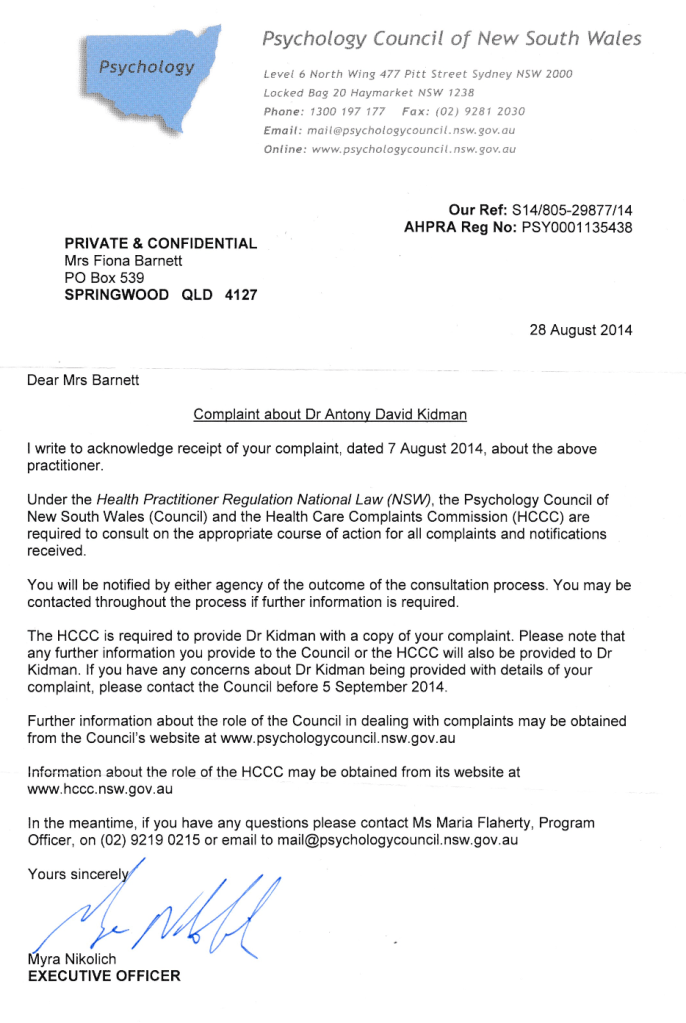
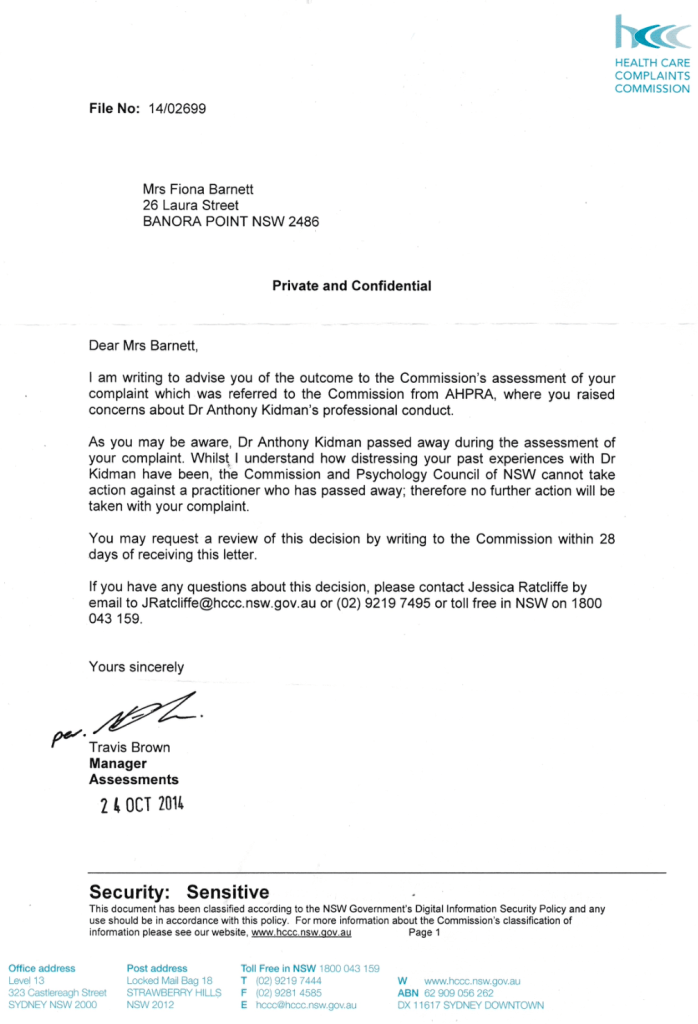
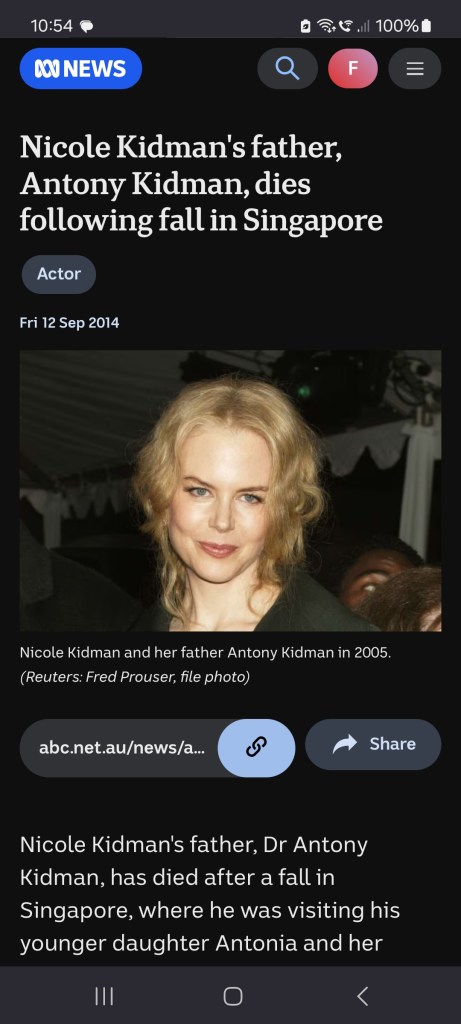
I filed complaints regarding Antony Kidman’s abuses of me with heath authorities who told my psychologist I was not the first complainant. Nicole Kidman’s security team told the media her father was placed on suicide watch immediately following my notification. The AFP had reportedly been preparing extradition proceedings when Antony Kidman suddenly died. Initial media reports stated Kidman fell from his daughter’s hotel balcony in Singapore. His reported cause of death changed several times, with further details sealed under foreign law.

Journalists informed me Nicole Kidman had adopted a “Scientology approach to managing” me. I experienced coordinated harassment and surveillance. ASIO agents pursued me while I attempted to file police reports. My car was shot at on the motorway, and a meat cleaver was left beneath the bullet hole that evening. In North America, incidents included a deliberate car collision and a knife threat. Individuals with police or military backgrounds repeatedly moved into neighbouring properties. Health professionals I consulted later appeared to have similar connections.

The publicly-funded ABC (Australian Broadcasting Corporation) attacked, mocked, defamed, and discredited me on national television. They had grounds for concern, because I recall how ABC Sydney studios were used to film child snuff porn, and to program child MK-Ultra subjects. British Playschool presenter John Hamblin raped me as a pre-schooler on my Nazi grandparents’ kitchen table in front of CIA psychologists Antony Kidman and Wendy-Louise Walker.

Blacklisted from traditional platforms, I turned to alternative media. I launched a six-year independent campaign to protect my family and myself while undertaking intensive trauma therapy. I conducted interviews, hosted online platforms, and published articles that gained significant traction. A university lecturer filmed the ‘Candy Girl’ documentary about my child trafficking experiences in Sydney. Steve McMurray identified my perpetrator network who had used aliases, and together we created Australia’s first podcast dedicated to exposing child trafficking networks. My work was amplified internationally by alternative commentators, including David Icke who published my free book ‘Eyes Wide Open’ that became an underground classic. I never monetised a thing.

Intelligence agencies deployed coordinated online efforts to discredit me. Specialised government units, including police informants and agent provocateurs, sought to entrap me into breaching anti-terrorism laws by encouraging me to accept illegal weapons, express support for violent rhetoric, and host agents posing as terror suspects.

I received up to 250 messages a day from other victims and witnesses, including internationally. Further allegations emerged against my perpetrators, notably Antony Kidman and PM Bob Hawke. Victims of Daruk government boys’ home and Engadine BoysTown reported being used for MK-Ultra experiments and said Gough Whitlam and other former prime ministers frequented Daruk to procure boys for sex. My advocacy work behind the scenes, which included liaising with police and mainstream journalists, forced police to establish a Daruk taskforce and culminated in convictions of low-level perpetrators. The CIA employees who conducted the MK-Ultra expriments evaded mention.

Military veterans claimed knowledge of underground facilities, “Aryan breeding programs,” and “kids in cages” located below Lucas Heights nuclear reactor, Holsworthy Army Base, and Glenbrook Airforce base. One veteran, a retired lawyer, said his friends – my former handler Wendy-Louise Walker, and her assistant Keith Dawes – recognised me from my press conference as one of their Holsworthy victims; he committed to this account in written legal documents. A decorated Vietnam veteran, special forces and intelligence officer, William Bowser OAM, said my disclosures posed a national security risk comparable to Edward Snowden or Julian Assange.

I publicly criticised the newly appointed Prime Minister Scott Morrison for posing with my Freemason perpetrators, and I questioned his connections to CIA cut-out Hillsong Church after individuals contacted me alleging ritual abuse and child trafficking links involving Antony Kidman.

I also linked global trafficking operations to figures such as Lt. Col. Michael Aquino, founder of the U.S. Army’s Psychological Operations division whose CV stated he was in the Order of Dagon. In response to longstanding allegations of child sex trafficking, and satanic ritual abuse, Aquino appeared on Oprah dressed in a ridiculous Halloween costume and framed the multiple accusations as ‘religious discrimination.’ Aquino played a central role in shaping counter-narratives, by coining the term ‘satanic panic’ and creating the False Memory Foundation which was stacked with accused paedophiles including head CIA psychiatrist Martin Orne.

I described connections between MK-Ultra research, the University of Sydney, CSIRO, military facilities, and my perpetrators. My researcher Steve McMurray found evidence the CIA funded Martin Orne’s 1960 visit to the University of Sydney to teach MK-Ultra hypnosis. Orne trained Antony Kidman, Wendy-Louise Walker, Gordon Hammer, and Phil Sutcliffe, all of whom later applied CIA trauma and dissociation methods to me in facilities beneath Lucas Heights and Holsworthy, and in the University’s Madsen Building. Their protocol included hypnosis, psychedelics, rape, waterboarding, sensory deprivation, spinning, and electrocution. This induced systematic conditioning and memory compartmentalisation in preparation for the Western child soldier program known as MK-Delta.

When QAnon emerged, I recognised it as another of Aquino’s psyops intended to control public discourse about elite trafficking. Aquino’s old military associate Jim Watkins, owner of the 8Chan porn site, hosted and played ‘Q.’ Although journalists labelled me the “QAnon poster child,” I abstained from public comment on advice from my AFP contact.

My central thesis was this: Child sex trafficking operates as a global blackmail and control system overseen by military intelligence agencies, particularly the CIA. This is linked to historical programs such as MK-Ultra, rooted in multigenerational trauma conditioning and esoteric secret society practices.

Anthropologists and OSS/CIA officers Margaret Mead and Gregory Bateson spearheaded the first highly classified scientific investigations into psychedelics and hypnosis from the 1930s onwards. They assembled a covert team of weaponised anthropologists, pharmacology researchers, psychologists, neuroscientists, and computer scientists to conduct the MK-Ultra research. Their networks extended into Australia, centred at the University of Sydney where Margaret Mead lectured and used falsified research to help facilitate the Marxist cultural revolution, and at Holsworthy where Gregory Bateson abused me as a young girl.

Britain’s ‘Operation Matchbox’ relocated Nazi scientists including bioweapons head Eric Traub, and Nazi doctor Leonas Petrauskas (my Gestapo grandmother’s friend), to Australia. National Archives show ASIO cleared this pair to enter Papua New Guinea, where they liaised with Margaret Mead, and conducted MK-Naomi bioweapons research. Eric Traub became the covert head of our new CSIRO. Intelligence-linked research continued within the University of Sydney’s CSIRO-owned Madsen Building beyond ownership transfer in 1980.

I also described historical ties between Leonas Petrauskas, his friend Antony Kidman, the University of Sydney, and the OTO whose national headquarters were housed in the University’s Wentworth Building. The OTO closed their office in the student services building following my police witness statements, plus release of the ‘Candy Girl’ documentary, which identified the crimes committed by OTO members including Vice Chancellor John Manning Ward, on University of Sydney grounds. Internal documents proved the link between this Gnostic fraternity and ABC personnel.

Aquino dispatched his asset, Hollywood actor Isaac Kappy, to entrap me. Tim Stewart facilitated Kappy’s travel to my home. Tim Stewart’s wife was head bridesmaid at Scott Morrison’s wedding. Morrison placed a media ban on identifying Tim Stewart who posed with the PM on a Hawaiian beach toasting cocktails while Australia burned.

Kappy ‘suicided’ mid-2019, after he failed to insert police agents into my home or have me phone Aquino on the four numbers provided. Aquino died shortly after Kappy.

Instead of being institutionalised and silenced, I reintroduced the term “ritual abuse” into mainstream discourse. At my suggestion, the Prime Minister included the term in his 2018 national apology to child abuse victims. The ABC tried to bury this legacy in 2021. An ABC 4 Corners aired an episode which falsely portrayed Tim Stewart as a QAnon conspiracy extremist, and included my name and image from a zoom call I had with Stewart and Isaac Kappy. An ABC news article plagiarised Steve McMurray’s research and writings concerning MK-Ultra links to the University of Sydney, that Steve and I had published online since 2015.

Since I first spoke up over a decade ago, what was labelled conspiracy theory has steadily entered mainstream headlines. Bob Hawke’s daughter accused her father of concealing her rape by a Victorian Labor politician. Every major news outlet, including the ABC, has reported on an internationally connected “Sydney satanic paedophile ring” involving a decorated NSW police officer. The criminal cases of Cardinal Pell, NXVIM, Harvey Weinstein, Sean ‘P-Diddy’ Combes, Jeffrey Epstein, and Ghislaine Maxwell hit the mainstream news. The major Australian banks were fined for laundering money from child and drug trafficking and funneling this into Middle-east terror activities.

The Epstein files implicate Australian politicians, U.S. presidents, British royals, Mossad, Bohemian Grove, and the Rothschilds. The documents reveal a direct professional connection between Kevin Rudd and Jeffrey Epstein through their mutual participation in the Mongolia Presidential Advisory Board. Paul Keating’s daughter, Katherine Keating (aka Catherine), served as CEO of JPMorgan Chase’s U.S. private bank and oversaw the firm’s banking relationship with Epstein after his conviction for child sex trafficking. She also socialised with Epstein, Prince Andrew, and Woody Allen. Epstein stated in email that he represented the Rothschild family’s banking interests, was a member of the Trilateral Commission and Council on Foreign Relations and was strongly connected to the Bilderberg Group.

The Epstein files show 66 total mentions of Nicole Kidman across the collection. The most direct connection appears in a July 2, 2010 email where Epstein writes to a redacted recipient: “call me [REDACTED]” in response to a message stating “I’m with Nicole now.” A particularly revealing email chain from October 2010 shows billionaire Tom Barrack writing to Epstein: “U and I need to talk about Nicole!!! I am just being smart and considerate of her! Where r u tomorrow! I am in Dubai.”

Epstein file Document EFTA00020457 is an FBI victim statement which alleges Prince Andrew watched Ghislaine Maxwell torture a young girl with electrocution at Andrew’s Royal residence in Windsor. Document EFTA00040577 is an email in which a victim named Bryan Miller states he witnessed Prince Andrew torture a young woman to death. 

Finally, articles I wrote in 2014 are referenced in the Epstein files. These concern complaints lodged by a Bond University law student. That student’s complaints echo those I had filed against Bond University regarding paedophile ring psychology lecturers, the Bond Psychology Clinic concealing reports of local DOCS employees sex trafficking foster children, plus male and female Bond lecturers systematically raping students.

I stand by my original declaration:

Fiona Barnett was right.

SELECT DOCUMENTS

The Canberra Times, Tue 29 Oct 1991, p.5
Prince Andrew, Chairman of the NSPCC’s (National Society for the Prevention of Cruelty to Children) FULL STOP campaign, with benefactor Nicole Kidman in 1999.
Prince Andrew: ‘We have to make sure that our children don’t accept abuse, that they point the finger and say, “This is unacceptable.”’

Documents EFTA00037470 – EFTA00037470. UK National Crime Agency referred allegations against Lady Clare Guinness/Iveagh, President of NSPCC’s West Sussex branch, to FBI/DOJ for covert investigation. Allegations of close personal ties with Epstein, and that Lady Clare Guinness/Iveagh sexually abused an Epstein victim.

Document EFTA00020457. FBI witness statement alleging Prince Andrew watched Ghislaine Maxwell electrically torture a young girl at his Royal residence. 

Document EFTA00040577: Witness alleges Prince Andrew tortured a girl to death.

Document EFTA00832976. Epstein states: “I represent the Rothschilds.”

Document EFTA02549842. Suggests Epstein had attended Bohemian Grove.

Document EFTA01877437 suggests Bohemian Grove was considered a networking opportunity for international business connections.

Document EFTA00606442. Epstein was a member of the Trilateral Commission plus Council on Foreign Relations. 

Document EFTA02416373. Epstein email referencing the Bilderberg Group.

Document EFTA00576999. Censored email re OTO member Rudolf Steiner.

Epstein file documents EFTA00081837 & other attachments reference my 2014 Independent Australia articles

Reconsolidation Therapy for PTSD

A quick and easy cure for trauma and dissociation sounds seductive to all vested parties. A simple drug and/or brief standardised protocol could slash government expenditure on mental health care, while exempting patients from the emotional pain of revisiting unprocessed trauma events. Reconsolidation Therapy is one such proposed treatment being explored. This article will examine the limitations of memory reconsolidation therapy.

Post-traumatic stress disorder

PTSD is a stress-related disorder caused by exposure to one or more incidents that the individual considers life-threatening (Phoenix Australia, 2021). Common symptoms include flashbacks, intrusive memories, memory avoidance, dissociative amnesia, hypervigilance, exaggerated startle response, and dissociation. Approximately 11% of Australians will experience PTSD (ABS, 2022). Lifetime prevalence rates are double for women (14%) compared to males (8%). About 80% of PTSD cases show comorbidity with other mental illness disorders (Qassem et al., 2021). Untreated, chronic PTSD leads to increased physical illness, brain damage, and premature death (Nijdam et al., 2023). PTSD is associated with attention, memory, and decision-making problems, resulting in impaired functioning across social, occupational, and daily living activities (Miller et al., 2024). Therefore, PTSD detrimentally impacts our economy via loss of financial participation and increased health care costs.

PTSD can present in over 600,000 different ways (Armour et al., 2017). The heterogeneous nature of PTSD causes clients with this disorder to exhibit a wide range of aetiology, symptomology, comorbidity, and chronicity. Multiple variables interact to adversely impact treatment response. Intervention is further complicated by inconsistency between diagnostic systems. The ICD-11 (WHO, 2019) acknowledges Complex-PTSD (C-PTSD). Up to 80% of veterans with PTSD also have C-PTSD (Sturt et al., 2023). C-PTSD stems from multiple (often developmental) trauma events. It typically features emotional dysregulation, dissociation, and attachment dysfunction. Recovery, therefore, requires long-term intervention and a strong client-therapist relationship (Karatzias et al., 2022).

The DSM-5 (APA, 2013) recognises a Dissociative-PTSD subtype (D-PTSD) but not C-PTSD. About 38% of people with PTSD meet D-PTSD criteria (White et al., 2022). Dissociation is associated with treatment resistance (Kratzer et al., 2021). Dell (2018) considers dissociation a form of autohypnosis that PTSD sufferers induce to psychologically distance themselves from emotional or physical pain. Kluft (2023) agrees that dissociation is a trance state.

Therefore, treating C-PTSD or D-PTSD is vastly different to addressing simple PTSD caused by one adult-onset trauma incident. There exists no generic PTSD treatment incorporating every PTSD presentation. Public healthcare systems lack the resources to provide trauma-informed treatment to complex PTSD cases (Murray, 2017; Winkler et al., 2023). It is therefore imperative to consider new, possibly multimodal, treatment approaches. There is a need for accessible and effective PTSD treatments. Accessible means affordable, brief, engaging, and practical (that is, a standardised protocol).

Mechanism of trauma

The prevailing hypothesis is that PTSD is a memory disorder. PTSD is thought to stem from abnormal memory encoding during a trauma event. This implicates the amygdala–hippocampus–prefrontal cortex (PFC) circuit (Ressler et al., 2022). The fear conditioning model suggests PTSD symptoms stem from concurrent amygdala hyperactivity and hippocampal-PFC suppression (Karl et al., 2006). Fear conditioning occurs when a neutral stimulus becomes a conditioned stimulus (CS) after being paired with a threatening stimulus (Battaglia et al., 2023).

Memory reconsolidation

PTSD is associated with deficits in memory storage (Chalkia et al., 2019). Memory formation is said to involve encoding (learning), consolidation (moving from short to long-term storage), and reconsolidation (updating) (Astill Wright et al., 2021; Ortega-de San Luis & Ryan, 2022).

Brain states are indicated by different oscillations, and these states are essential for learning and memory consolidation (Ritter et al., 2015). Encoded memories (engrams) are linked to predominantly theta and gamma brain oscillations, which support synaptic plasticity, memory reactivation, and event sequencing (Hanslmayr et al., 2012; Ritter et al.).

An engram is reactivated and temporarily destabilised when the conditioned stimulus is presented (Pitman, 2015). This brings the memory into conscious consideration, where it can be changed. During a 6-hour reconsolidation window, memory is thought to be modified by disrupting the link between the unconditioned stimulus and the conditioned fear response. This reduces the associated emotion while preserving contextual memory of the trauma incident.

Critically, the updating process in memory reconsolidation is said to require new protein synthesis (Nader et al., 2000).

Conditions needed for reconsolidation to occur in a therapeutic setting are said to include sufficient memory reactivation, prediction error, and emotional regulation (Taylor-Shore, 2023). Emotion enhances memory recall (Mueller & Cahill, 2010). The trauma memory must be felt emotionally and bodily, triggering the brain to predict a feared outcome. Prediction error (PE) is the mismatch between what is expected and what happens (Sevenster et al., 2014). Too little PE strengthens the old memory; too much creates a new one; and an optimal level of PE may destabilise and update the original engram (Bein et al., 2020; Sinclair & Barense, 2018). The person must be sufficiently emotionally regulated to notice the PE (Taylor-Shore).

Reconsolidation and extinction are considered mutually exclusive (Sevenster et al., 2014). In extinction, a conditioned fear response decreases when reinforcement is removed (Battaglia et al., 2023). The timing and context of the conditioned stimulus (CS) are said to determine whether reconsolidation or extinction occurs (Ferrara et al., 2023). Minor changes to the reconsolidation method or environment can influence the outcome. Reconsolidation requires brief exposure to the CS, whereas extinction requires prolonged CS exposure (Mueller & Cahill, 2010). Reconsolidation or extinction begins once CS exposure ends, in the absence of the expected unconditioned stimulus (Pedreira et al., 2004). Reconsolidation also depends on how the memory was encoded, especially which senses were originally engaged during CS exposure (Agustina-Lopez et al., 2016). Activating the same sensory systems during retrieval to the same extent as happened during encoding increases the likelihood of reactivating the target engram.

Propranolol

Propranolol is a β-adrenergic blocker. The drug’s ability to disrupt memory reconsolidation by blocking new protein synthesis has been widely researched (Beckers et al., 2017). Propranolol inhibits the stress-related hormones adrenaline and noradrenaline (NA), which feature in memory processing (Battaglia et al., 2023). The β1 receptors predominantly exist within the heart, whereas β2 receptors are in the lungs and blood. Propranolol decreases heart rate and blood pressure, which helps reduce stress reactions and maintain emotional regulation (MacCormack et al., 2021). This same mechanism causes bronchoconstriction and makes propranolol contraindicated for asthmatics. PTSD and asthma share a bidirectional relationship (Allgire et al., 2021); therefore, propranolol cannot be universally administered to PTSD subjects.

Kroes et al. (2016) administered propranolol before exposure therapy and concluded that this drug impacts both (1) the dmPFC to prevent retrieval of fear memory and (2) the hippocampus to increase contextual safety learning. While noradrenaline (NA) is known to modulate fear learning and disrupt long-term extinction, its effect on fear consolidation and extinction in humans remains unclear and controversial (Battaglia et al., 2023). Debate exists over propranolol’s mechanism, which may increase NA release. While β-adrenergic receptors seem to support fear extinction, it is unclear whether increased NA helps people learn safety signals or merely remember them.

Criticisms of the memory reconsolidation paradigm

Gisquet-Verrier and Riccio show that so-called reconsolidation effects can occur without protein synthesis, challenging the standard view that new protein formation is required. They argue that earlier animal studies of retrograde amnesia, where drugs were given after learning, missed a key factor – internal state. When they repeated these experiments but reintroduced the same drug state, the apparent amnesia was reversed. This suggests the effect is better explained by state-dependent memory rather than by memory erasure. 

According to this framework:

  • Memory is encoded together with the subject’s internal state (e.g., drug-induced calm).
  • Recall is strongest when that same state is reinstated.
  • If the state differs, the memory may seem inaccessible (amnesia).
  • Recreating the original state restores access.

The authors further propose that when a memory is reactivated, it can incorporate the current state, making future retrieval dependent on that condition. Consistent with this, they report that Propranolol can produce clear state-dependent effects.

Reconsolidation effects have been induced without involvement of protein synthesis (Gisquet-Verrier et al., 2015). This contradicts the paradigm that protein synthesis is essential for reconsolidation. Further, the reconsolidation hypothesis was based on animal studies of retrograde amnesia, in which analgesic agents were typically administered after the learning condition. Those studies never examined what might happen if the analgesic were administered beforehand. Gisquet-Verrier and Riccio (2018) repeated and ‘completed’ these original experiments by readministering the treatment condition, which reversed the amnesia.

This finding points to state-dependency as causing the amnesia effects. State-dependent learning, or memory, is when information is better recalled when the subject’s internal state during encoding and retrieval matches. These states are altered by drugs, emotion, hypnosis, and other variables.

Gisquet-Verrier and Riccio conclude that memory retrieval reactivates the memory, allowing the drug-induced state of calm to integrate with it. Later recall then depends on that state. Without it, amnesia occurs, but it can be reversed by re-administering the drug and placing the subject back in the original state. They add (p.28), “…we have recently shown that propranolol may induce clear state-dependency…”

Reconsolidation Therapy

Reconsolidation Therapy (RT) is a novel PTSD treatment based on memory reconsolidation theory (Brunet et al., 2018, 2014, 2008). RT combines propranolol intake with engram reactivation techniques. During six weekly sessions, the subject reads out a written narrative of their trauma incident while under the influence of pre-administered propranolol. The goal is to trigger the engram through script imagery and, using propranolol, disrupt the reconsolidation of the emotional memory to reduce the associated emotional intensity. Results of the therapy approach were measured by comparing pre/post-test physiologic responses and standardised PTSD scale scores.

Key randomised control trials compared RT with placebo (Brunet et al., 2018, 2014, 2008). As a result, RT demonstrated significant PTSD symptom reductions lasting up to 6 months. Medium-to-large effect sizes were observed, primarily for reductions in hyperarousal, intrusions, and emotional distress associated with the conditioned stimulus. In a research context, RT demonstrated equal efficacy as TF-CBT and drugs for treating simple PTSD. These results indicate RT’s potential as a standardised protocol that can be delivered by inexperienced staff in public healthcare settings. RT’s short treatment time improves cost-effectiveness, and its reduced trauma exposure anticipates lower dropout rates.

Limitations

There is limited replication of Brunet’s studies, with mixed results (Lonergan et al., 2013; Raut et al., 2022). This flags potential problems with RT’s theoretical basis, differences in study design, subject characteristics, or test-environment effects.

The exact mechanism by which propranolol induces amnesia remains unclear (Beckers & Kindt, 2017). Therefore, state-dependency and extinction cannot be dismissed as potential explanations. Variations in research design include the employment of eyes-closed mental imagery, plus the use of trauma script audio-recordings featured in the 2008 project. Subsequent (2014, 2018) studies changed to eyes-open, self-read scripts and provided emotional support to subjects by trained therapists. This highlights two potential confounds: mental imagery and research assistant characteristics (including dyadic synchrony).

Mental imagery

Subjects’ level of emotional engagement in the visualisation of the trauma script impacts treatment effects (Jaycox et al., 1998). Based on the theory that maladaptive behaviour is a learned response stemming from antecedent aversive conditioning (Stampfl & Levis, 1967), Levis (1991) combined Pavlovian conditioning with psychotherapy to demonstrate that the most extreme developmental trauma memories can be processed and resolved using mental imagery alone. A suggested mechanism underpinning mental imagery as a treatment modality is its activation of the same brain areas as those engaged during actual movement (Jeannerod, 1995).

Research assistant characteristics

The extent to which the research environment influenced emotional regulation in the later Brunet studies is unclear. Memories are reconsolidated without the amygdala’s emotional effect. A sense of calm contributes to optimal conditions for reconsolidation. Different variables may dampen the amygdala. The drug propranolol does, but so can human connection. In the 2018 (Brunet et al) study, “doctorate-level therapists” interacted with subjects by reading scripts and “commending” subjects’ efforts. This introduced research assistant characteristics (such as empathy, vocal intonation, and microfacial expressions) that may have facilitated emotional bonding between the assistant and the test subject.

Dyadic synchrony is a complex interactional process between two people (e.g., mother-baby or therapist-client). The resulting bond is critical for the development of self-regulation (Mayo & Gordon, 2020). This bond is a consistent predictor of therapeutic change in general, including symptom reduction (Zilcha-Mano et al., 2020). Dyadic synchrony occurs across three physiological levels: (1) synchronisation of autonomic nervous system function, causing synchrony of physiologic responses including heartbeat, breathing, and electrodermal activity; (2) neural oscillations; and (3) release of oxytocin and cortisol (Feldman, 2017).

Oxytocin may enhance empathy, trust, and cooperation (Hohl et al., 2024; Zilcha-Mano et al.). Research (including that by Wagner and Echterhoff, 2018) suggests oxytocin significantly affects memory recall, primarily by enhancing the vividness of social memories and faces, while also modulating emotional memory in context-dependent and attachment-style ways. Oxytocin can strengthen memories of positive social interactions but may also heighten recall of negative and stressful memories, depending on the subject’s emotional state.

Therefore, dyadic synchrony may have led test subjects to bond with their research assistants, thereby enhancing subjects’ affect regulation and cooperation on the research project. As mentioned, subtle environmental changes can significantly influence study outcomes.

Generalisability

That propranolol is contraindicated for asthmatics reduces the treatment’s clinical utility. PTSD subjects with dissociative tendencies were also excluded from Brunet’s studies. The exclusion cut-off was set at Dissociative Experiences Checklist scores >20 (when scores of 20 to 30 indicate PTSD dissociation; Bernstein & Putnam, 1986). This could exclude around 38% of PTSD sufferers (White et al., 2022) because an intervention cannot be given to populations upon whom it was not tested. D-PTSD subjects do not hinder trauma-focused treatment outcomes and so should have been included in research studies (van Minnen et al., 2016; Zoet et al., 2018).

Conclusion

Reconsolidation Therapy as a PTSD treatment has demonstrated several crucial limitationsIts underpinning theory remains contested. Empirical replication of its effects is limited. Its exclusion of dissociative cases, plus its contraindication in asthmatics, restricts generalisability and so clinical applicability. The lack of clarity regarding the mechanism of Reconsolidation Therapy and whether propranolol assists memory updating through state-dependent integration, extinction, or reconsolidation warrants further investigation.

CRYSTALS, CLAIRVOYANCE, AND CUDDLES 

A real-world implication of biomarker evidence

© Fiona Barnett 

            On 3 October 2024, the Australian federal government introduced legislation banning participants in the National Disability Insurance Scheme (NDIS) from accessing electroencephalogram neurofeedback (EEG-NFB) as a funded support. The Minister for Social Services grouped EEG-NFB with a list of “snake oil” goods and services, including clairvoyance, crystal healing, and something called cuddle therapy – and rejected all of these practices as having no “scientific or evidentiary basis.” 1

            This development is a setback for Australia’s EEG-NFB practitioner community, which has devoted decades to garnering recognition and funding for a neuroscience-based treatment modality. Australia’s political stance denies 70 years of published case studies and scientific research documenting EEG-NFB’s ability to treat a range of disorders, especially attention-deficit/hyperactivity disorder (ADHD).

            The Australian government’s denigration of EEG-NFB starkly contrasts with the US Food and Drug Administration’s (FDA) approval of the first EEG-based diagnostic biomarker in 2013.2 The theta-to-beta ratio (TBR) is used to assist clinical diagnosis of ADHD in children and to inform EEG-NFB treatment (NFB is also FDA-approved).

            The opposing stances by two Western countries raise the question of why. How conclusive was the scientific evidence base that met the threshold of US standards over a decade ago? Why did the existing evidence base recently fall short of domestic approval? This paper will consider these questions. Spurred by current political events, this paper aims to examine the potential of an EEG biomarker for ADHD, the TBR, and its ability to: inform diagnosis; identify specific ADHD subgroups; predict, inform, and evaluate NFB treatment response; and help avoid adverse events.

            ADHD diagnosis shortcomings

            An estimated 800,000 Australians share an ADHD diagnosis.3ADHD diagnosis in Australia is based on the Diagnostic and Statistical Manual of Mental Disorders (DSM5).4 According to DSM5 diagnostic criteria, ADHD’s core symptoms are age-inappropriate hyperactivity, impulsivity, and inattention. Use of the DSM poses the following problems:

  • DSM5 diagnosis primarily relies on developmental history, subjective observation, parent/teacher checklists, and psychometric measures mainly designed and normed on males.5,6 This approach risks bias and inaccuracy, potentially contributing to misdiagnosis and inappropriate treatment.7-9
  • The DSM5 content was determined by pharmaceutical company shareholders with a vested interest in the business of prescribing drugs to ADHD patients as young as 3 years of age.10,11
  • The DSM5 is steeped in cultural and gender bias, ignorant of ADHD aetiology, and it relies on subjective clinical opinion about vague symptom clusters instead of objective examination of the brain.12
  • Differential diagnosis is difficult because ADHD symptoms overlap with those of other DSM disorders, including oppositional defiance disorder (ODD), autism spectrum disorder, borderline personality disorder, anxiety, plus intellectual giftedness.13,14

            Also, the DSM5 recognises only three main ADHD presentations: predominantly inattentive, predominantly hyperactive-impulsive, and combined.15 However, researchers have identified other ADHD subtypes. For instance, based on thousands of single-photon emission computed tomography (SPECT) scans, USA psychiatrist Daniel Amen reportedly identified seven distinct ADHD subtypes, differentiated these from other DSM diagnoses with overlapping symptomology, and discovered that each subtype responded to different treatments, with one subtype having an adverse reaction to stimulant medication.16,17 The latter finding is particularly pertinent to the topic of this paper.

            The DSM’s deficits might help explain: (a) why ADHD children are commonly misdiagnosed (for example, studies have found ADHD clinical diagnosis to be inaccurate in 34 to 38% of cases18,19), (b) why males are overrepresented in ADHD samples (for example, 1/5 of USA boys are diagnosed ADHD),20 and (c) why most children diagnosed with ADHD are prescribed psychopharmaceuticals.21

            ADHD biomarker advantages

            It appears that psychiatric diagnosis may benefit from neuroscientific methods. It seems advantageous for clinical diagnosis and treatment to be informed by objective biomarkers.

            A biomarker is physical evidence of a condition of interest. Biomarkers are used to measure the onset and progression of disorders and/or treatment effects.22 Scarr et al. asserted that biomarkers must be simple, standardised, inexpensive, individualised, and capable of discriminating between disorder subtypes.23 ADHD biomarkers could help classify clients, identify ADHD subgroups, prevent ADHD over-diagnosis, determine treatment, predict clinical outcomes, plus stop blanket stimulant prescription and subsequent drug abuse.24

            The World Federation of ADHD defined the ideal ADHD biomarker as being: greater than 80% accurate at detecting ADHD; greater than 80% accurate at distinguishing between ADHD and other disorders with similar symptomology; reliable; reproducible; inexpensive; non-invasive; easily administered; and confirmed by two or more independent studies conducted by qualified researchers who publish their results in peer-reviewed journals.25 This list of parameters eliminates neuroimaging techniques like magnetic resonance imaging (MRI), positron emission tomography (PET), and SPECT due to cost, complexity, plus the last two involve injecting potentially carcinogenic radioactive substances in child subjects.26,27 This leaves EEG-based modalities, including event-related potentials (ERP), quantitative EEG (QEEG), and the TBR as ADHD biomarker candidates.28,29 This paper will now consider whether the TBR fulfils the ADHD Federation’s biomarker requirements.

            TBR mechanism

            The TBR is an EEG biomarker, a measure of electrical currents in the brain that vary with function. Originally defined at the Cz electrode placement site, the TBR is the ratio of slow (θ, typically 4-8 Hz) to fast (β, typically 15-20 Hz) brainwaves.30 The largest TBR is located at Cz or Fz electrode placement sites. Theoretically, the TBR is higher in ADHD subjects in the resting state.31 Normal adult TBR is 2:1, exceeding this marks the ADHD threshold. Owing to θ differences in children (aged 5 to 13 years), their TBR threshold for ADHD is >θ=3xβ.

            EEG-NFB training is a form of biofeedback that uses EEG technology to feed brainwave information back to the brain in real time, through sight and sound, which the brain uses to change itself.32 Repeated activation strengthens synaptic connections between neurons and forms new neural pathways.33 The initial research on EEG-NFB as a treatment for ADHD (then called hyperkinesis) was published in 1976.34 Lubar’s original EEG-NFB training protocol for ADHD targeted the left-brain motor strip with θ inhibition. The effects of this protocol were comparable to stimulants. Because the main result was a reduction in θ to β amplitude, Lubar adopted the TBR as an ADHD biomarker. His theta-beta NFB protocol targeted the sensorimotor rhythm (SMR) site (Cz), where the TBR was highest.35 Variations of Lubar’s treatment protocol were developed, including that which placed the feedback electrode at Cz and inhibited θ while increasing β. Elevated θ is considered a marker of drowsiness and sleep, while βbrainwaves are related to attention, or externally-focused sustained concentration. The basic goal of TBR-NFB training, therefore, was to increase attention by decreasing θ and increasing β. 

            TBR in diagnosis and treatment

            Early TBR studies yielded results portraying the TBR as a reliable ADHD biomarker clinically useful for diagnosing ADHD and tailoring NFB treatment protocols.36-38 For example, Monastra et al.39 reported that ADHD subjects with high pre-test TBR showed decreased TBR plus reduced clinical symptoms following TBR-NFB training. This suggests the TBR is useful for predicting treatment response. The effect size (2.22) for the NFB protocol was enormous. This result was attributed to subjects being selected and matched to treatment based on their TBRs. A meta-analysis by Arns et al. of studies using the TBR-NFB protocol showed a large effect size for reducing symptoms of inattention and impulsivity, but not as impressive a result for hyperactivity. This and other studies reported TBR-NFB to be as effective as stimulants in improving inattention and impulsivity in ADHD subjects.40 Snyder et al.41 combined clinical ADHD evaluation with the TBR biomarker to improve the diagnostic accuracy of ADHD children by up to 88%. Such research findings impressed the US FDA to approve the TBR as a paediatric ADHD biomarker.

            TBR criticisms

            Subsequent TBR studies yielded inconsistent results. Ogrim et al. did not repeat the TBR or θ differences between ADHD versus normal subjects.42 A large study by Loo et al. found the TBR did not discriminate between ADHD subtypes.43 Liechti et al. found no reliable θ or θ-β increases in ADHD subjects.44 Hernandez et al. found no significant differences between ADHD subtypes using the TBR.45 Only recently, Bluschke et al. found limited effects for the TBR-NFB protocol.46 These contradictory findings may reflect various problems. Back in 2009, Arns et al. identified several issues, including poor research design and a lack of evidence that EEG-NFB exclusively accounts for the clinical benefits.47 These same problems have not been rectified 15 years later.

            Many TBR-related studies excluded hyperactive subjects from their samples.48,49 For instance, Snyder et al. excluded subjects who could not sit still for at least 30 seconds of EEG recording.50 Such exclusion biases the data in favour of an anticipated outcome. It strengthens the growing argument that the TBR is only applicable to ADHD characterised by inattentiveness. It supports criticism that the TBR captures just one of many ADHD subtypes, each possibly possessing a different aetiology, a subject that will now be explored in detail.

            ADHD subtype discrimination

            The clinical utility of the TBR is questioned due to the limited information it provides. The TBR only indicates whether someone is on the boundary of having a particular ADHD-like profile. It cannot discriminate between ADHD subtypes.51,52 Multiple studies have found high-β in ADHD subjects, suggesting ADHD is not always characterised by slow EEG activity, and that there are other ADHD subtypes which the TBR does not capture.53,54 Clarke et al. identified three different EEG profiles: (1) excessive slow brainwave activity plus fast brainwave deficits, (2) increased theta amplitude plus decreased beta activity, and (3) excessive beta activity. 55

                  Researchers disagree that resting-state TBR is a reliable EEG biomarker for ADHD because it is seemingly insensitive to the hyperactive type. Arns et al. found that only one subtype of ADHD children showed an excessive TBR in the resting state.56 Heinrich et al. tested TBR during attention and found excessive TBR only for children with the inattentive ADHD type.57 Van Doren et al. found TBR-NFB treatment effects were driven by decreased θ activity in a group of mainly inattentive ADHD children, and concluded TBR-NFB training is mainly suited to one ADHD subtype. 58

            ADHD subtypes with alternative aetiologies may necessitate alternatives to stimulant prescription as the first-line treatment. Researchers and clinicians have suggested the following as possible ADHD aetiologies:

            1. Developmental traumaADHD children are more likely than controls to have developmental trauma histories, suggesting trauma may cause an ADHD subtype.59 To illustrate, the entire USA trauma therapy community of 150,000 practitioners lobbied the DSM5 board to include developmental trauma disorder (DTD) in the 5th edition, on the grounds that DTD is typically misdiagnosed as ODD, conduct disorder, and ADHD.60 Adding weight to the hypothesis that trauma may cause a type of ADHD, Saccaro et al. concluded that ADHD is a stress response and hence why it is comorbid with high anxiety.61 Misdiagnosing trauma as ADHD has serious treatment implications because trauma disorders do not respond to the cognitive-behavioural learning models routinely used to treat ADHD.62-64

            2. Lead toxicity. There exists an association between ADHD and lead poisoning, a disease that causes motor coordination problems.65,66 For instance, a cluster of Wollongong children exposed to lead fallout from a local copper smelter displayed extremely high-β in temporal, frontal lobe, and midline sensory motor areas, plus complex ADHD presentations including problems with regulation, behaviour, focus, attention, and comprehension.67

            3. Developmental coordination disorder (DCD) has the highest comorbidity with ADHD.68,69 Inattentive-type ADHD children often present with DCD.70 This is interesting, considering the TBR is measured on the somatosensory strip (Cz, C3, C4), which coordinates sensory input with motor output, and concerns gross and fine motor movements. Researchers found increased activity in the brain area responsible for visual processing in children with hyperactive ADHD.71 Since motor imagery and actual motor movement share common neural substrates,72 perhaps the ADHD subjects overly imagine themselves executing a movement but are disabled by DCD from achieving this. This is the clinical observation of art therapists who report that ADHD children with perinatal trauma histories routinely present with delayed motor coordination, which manifests as an inability to simply grasp clay.73 It is common for a course of clay field therapy to quickly close this sensory-motor-level developmental gap, resulting in parent and teacher reports of markedly changed behaviour at school and at home.

            4. Sleep disordersResearch shows that insomnia causes core ADHD symptoms, including inattention and behaviour dysregulation.74,75 ADHD symptoms have improved after sleep disorders were treated. This link between lack of sleep and ADHD may explain why both SMR-NFB and TBR-NFB proved effective at reducing ADHD symptoms. Sleep disorders may therefore cause an ADHD subtype. 

            Research by Arns and colleagues suggests the TBR is a biomarker of drowsiness, and that this explains why inattentive subjects have excessive θ, plus why the inattentive ADHD subtype responds to stimulants.76,77 Arns’ sleep-deprivation hypothesis may support the notion that TBR is more a measure of ADHD prognosis rather than diagnosis.78Kropotov concurred that the TBR is a biomarker of prognosis instead of diagnosis. 79

                  TBR denotes executive control?

            The subjects Arns trained at midline sites (Fz, Fpz or Cz) learned to self-regulate.80 Since these sites can affect impulsivity, attention, and emotional inhibition, Arns’ results suggest decreased θ plus increased β may indicate a desynchronised brain state. Perhaps TBR-NFB’s mechanism, therefore, is to synchronise and integrate the brain and thereby return self-control to the subject. This is what Van Doren et al. alluded to, concluding that the TBR-NFB is best considered a kind of performance training that improves attention in any brain, whether normal or abnormal.81 It makes sense that NFB training at Cz could generally assist regulation, because this site simultaneously affects the cingulate, which is associated with emotions, attention, and working memory. Van Son et al. similarly concluded that the TBR is likely a stable biomarker of executive control.82 

            Standardisation issues

            A major limitation of EEG-based research is the lack of standardisation, not only within this domain but also across the scientific field in general. There is no strict consensus on terminology or definitions amongst scientific researchers, who use different language and labels to describe the same thing. Science is so compartmentalised that different disciplines ignore each other’s findings and will announce the discovery of something published decades ago in different terms. Consequently, contemporary researchers give the impression that NFB is “still very young”83 and therefore an under-researched modality lacking reliability and validity, even though NFB research began in the 1960s.84

            Within EEG-based research, only electrode placement is internationally standardised via the 10-20 system.85However, site specificity still involves guesswork and results from multiple areas interacting in unpredictable ways. The numerical boundaries defining the different frequency bands (α, β, θ, δ, γ) are arbitrary. Some NFB researchers mix sensorimotor rhythm (SMR) with low-β and call it β. NFB clinicians typically call high-β just that and insist 12-15 Hz should only be called SMR when measuring the sensory motor strip. Others define β1, β2, and β3 as SMR, low-β, and high-β. Some say SMR is 12-15 Hz. Some call β1 SMR, β2 (15-22 Hz) low-β, and define high-β as 22 to 38 Hz. Paediatricians often max β readings at 30 Hz, while others reach 44 Hz. Some say high-β reaches a maximum of 38 Hz before transitioning to γ, which extends to 42 Hz. Yet some neurologists claim γ reaches 100 Hz. Such inconsistency is confusing and renders comparison between EEG-based studies impossible. It also provides ammunition for politicians to dismiss the validity of research findings and remove disability supports.

            Other possible confounds include subjects’ individual and/or developmental effects. For instance, the TBR pattern changes with age. Saad et al. found that θ remains elevated, whereas β does not remain low with maturity.86EEG parameters exhibit enormous individual variation, as demonstrated by the fact that high-IQ subjects exhibit faster α oscillations, widespread γ bursts, and greater right-hemispheric activity during processing compared to the norm.87,88Such individual variation complicates standardisation of EEG-NFB diagnostic and treatment protocols.

            Adding to the difficulty of identifying the electrophysiological correlates of ADHD, the brain is far too sophisticated and dynamic to approach from a black-and-white research perspective. One slight alteration in EEG-NFB can unexpectedly affect a different area that the clinician is not directly targeting.89 Consider a simple protocol where θor high-β is inhibited, plus 12-15 Hz SMR or β is rewarded. In theory, the researcher expects to see suppression of θ or high-β plus increased low-β or SMR. Yet the brain sometimes does nothing, or does its own thing in response, and suddenly nothing makes sense to the EEG reader anymore. So, θ or high-β might increase while SMR or low-β stays the same, and yet the patient still feels benefits. Thus, when EEG-NFB researchers think mechanically in terms of standard responses and expect simple increases or decreases, this approach may confound the research. A core issue here is the translational gap between scientist-researchers and experienced clinicians who understand the nuances of EEG-NFB in the context of ADHD.90

            NFB’s mechanism of action appears elusive. While pioneer researcher Steerman attributed its mechanism to operant conditioning,91 clinical NFB pioneers, the Othmers totally disagreed, believing it to be the result of implicit processing.92 The brain is so complicated, it is perhaps quantum, meaning it processes data inter-dimensionally.93Therefore, it may take quantum computers (that is, artificial intelligence) to comprehensively measure brain activity. Furthermore, with approximately 3,000 new research papers published daily, no human can keep abreast of the exponential growth in research publications and synthesise all study findings to identify reliable biomarkers. Yet AI possibly could.

            Future directions

            Little has changed since TBR was first used to identify ADHD groups and target NFB protocols for ADHD 50-plus years ago.94 Currently, the body of scientific literature offers insufficient clarity concerning how many ADHD subtypes exist, the underlying aetiology of each subtype, the most effective EEG-NFB protocol for each subtype, or the optimal number of sessions for each ADHD subtype. Perhaps the TBR is now an outdated measure, and it is time to consider alternatives. The future options are to (a) improve research methods or (b) find a new neuroimaging approach to help fill the current knowledge void.

            ADHD research typically assigns subjects to groups based on teacher rating scales, whereas NFB research typically applies a universal protocol to all subjects. Randomly assigning subjects to a flexible NFB protocol that adapts based on individual responses might yield new insights. This was the innovative approach taken by van der Kolk and colleagues.95,96 They started training at a certain frequency range, and then dropped this down 1 Hz every session until the subject complained of feeling under-aroused. This was then incrementally raised by ½ Hz until the optimal was reached. A few subjects had to swap protocols. Further, this research was designed in cooperation with leading EEG-NFB clinicians who can analyse QEEGs and detect subtypes and variations. This approach resulted in research publications that clinicians have found applicable, thereby bridging the translational gap.

            Finding an alternative biomarker to inform EEG-NFB training protocols for ADHD that addresses existing limitations seems difficult. Take QEEG, for example. ADHD children find it difficult to sit still and focus with their eyes closed for a QEEG assessment. Consequently, many resultant artefacts must be cut, leaving only a few seconds of data for analysis. If the QEEG amplifier has only 4 channels, the assessment must be completed in 4-channel lots, which lengthens the assessment time. Bigger clinics that own 21-channel units can complete the assessment in a single sitting. Another issue is that the QEEG requires greater experience to calculate and interpret, with emerging NFB clinicians often sending their data overseas for expert analysis. Further, although QEEG shows the whole brain, it does not prescribe the optimal reward range, where to start NFB training, or predict how subjects will respond to an intervention.

            In 2022, the US FDA approved a Korean invention called the iSyncWave.97,98 This device may signify a paradigm shift in functional neuroimaging, biomarker identification, plus EEG-NFB treatment protocols and analysis. The iSyncWave is a lightweight QEEG scanner helmet that measures brain changes, monitors shifts in NFB training protocols, and produces 3D images in real time. This device does not need electrode gel and is adjustable to fit different head sizes. The EEG scanner uses AI to quickly analyse QEEG results against large data sets and cross-reference them with measures of heart rate variability and vagal tone, which are deep physiological indicators that can be compared with EEG markers to validate findings. It also provides sex normative comparisons, thereby removing gender bias. This invention matches the brain’s complexity, which is not static but always changing. While the iSyncWave is currently expensive for the average clinician to purchase, it is cheaper and more portable than MRI and PET scanners, and it will surely become more affordable over time with mainstream use.

Conclusion

            In conclusion, although theoretically appealing, the TBR is an empirically inconsistent ADHD biomarker. This fact limits its role in informing NFB training protocols. Owing to variability across studies, age-related changes, and a lack of specificity, the TBR falls short of meeting the World Federation of ADHD’s biomarker criteria.

            Despite its limitations, the TBR might still have clinical utility as an indicator of inattentive ADHD subjects suited to EEG-NFB training protocols that increase theta oscillations, and/or who may respond to stimulant medication due to drowsiness. It seems that those ADHD subjects who do not reach the TBR threshold belong to a different subtype with a completely different aetiology and may not benefit from – or possibly be harmed by – EEG-TBR training or prescription drugs.

            Despite decades of investment in TBR research, relatively little progress has been made in terms of establishing its clinical utility. This may be attributed largely to poor research design and a lack of standardisation. It may be time to funnel resources into developing AI-driven alternatives for functional brain assessment. Perhaps the quality of the resulting scientific evidence will help Australian politicians distinguish EEG-based interventions from crystal healing, clairvoyance, and cuddle therapy.

References

1. The Hon Bill Shorten MP. Transcripts. Minister Shorten doorstop interview at Parliament House, Canberra. 1 October 2024https://ministers.dss.gov.au/transcripts/16216

2 FDA Permits Marketing of First Brain-Wave Test to Assess ADHD. Vol 23. Wiley Periodicals, Inc; 2013:5-.

3 May T, Birch E, Chaves K, et al. The Australian evidence-based clinical practice guideline for attention deficit hyperactivity disorder. Aust N Z J Psychiatry. 2023;57(8):1101-1116. doi:10.1177/00048674231166329

4 Diagnostic and Statistical Manual of Mental Disorders: DSM-5. 5th ed. American Psychiatric Association. 2013.

5. Saad JF, Kohn MR, Clarke S, Lagopoulos J, Hermens DF. Is the Theta/Beta EEG Marker for ADHD Inherently Flawed? J Atten Disord. 2018;22(9):815–26.

6. Putris J, Aydin A, Balkanas M, et al. A Preliminary Investigation into Quantitative Assessment of ADHD Treatment Efficacy on Hyperactivity Levels via Actigraphy. In: IEEE EMBS Int Conf Biomed Health Inform. IEEE; 2023:1-4. doi:10.1109/BHI58575.2023.10313419

7. Wakefield JC. Diagnostic issues and controversies in DSM-5: Return of the false positives problem. Annu Rev Clin Psychol. 2016;12(1):105-132. doi:10.1146/annurev-clinpsy-032814-112800

8. Newson JJ, Pastukh V, Thiagarajan TC. Poor separation of clinical symptom profiles by DSM-5 disorder criteria. Front Psychiatry. 2021;12:775762-775762. doi:10.3389/fpsyt.2021.775762

9. Gardner C, Kleinman A. Medicine and the mind – The consequences of psychiatry’s identity crisis. N Engl J Med. 2019;381(18):1697-1699. doi:10.1056/NEJMp1910603

10. Cosgrove L, Krimsky S. A comparison of DSM-IV and DSM-5 panel members’ financial associations with industry: A pernicious problem persists. PLoS Med. 2012;9(3):e1001190-e1001190. doi:10.1371/journal.pmed.1001190

11. Prescribing study reveals undertreatment of ADHD, depression, and anxiety among youth. The Brown University Child and Adolescent Psychopharmacology Update. 2018;20(4):1-4. doi:10.1002/cpu.30286

12. Clark LA, Cuthbert B, Lewis-Fernández R, Narrow WE, Reed GM. Three approaches to understanding and classifying mental disorders: ICD-11, DSM-5, and the National Institute of Mental Health’s Research Domain Criteria (RDoC). Psychol Sci Public Interest. 2017;18(2):72-145. doi:10.1177/1529100617727266

13. Bishop JC, Rinn AN. The potential of misdiagnosis of high IQ youth by practicing mental health professionals: A mixed methods study. High Ability Studies. 2020;31(2):213-243. doi:10.1080/13598139.2019.1661223

14. Ercan ES, Unsel-Bolat G, Tufan AE, et al. Effect of Impairment on the Prevalence and Comorbidities of Attention Deficit Hyperactivity Disorder in a National Survey: Nation-Wide Prevalence and Comorbidities of ADHD. J Atten Disord. 2022;26(5):674-684. doi:10.1177/10870547211017985

15. Epstein JN, Loren RE. Changes in the Definition of ADHD in DSM-5: Subtle but Important. Neuropsychiatry. 2013 Oct 1;3(5):455-458. doi: 10.2217/npy.13.59. PMID: 24644516; PMCID: PMC3955126.

16. Stafford C, Jaramillo C, Golden C, Amen D, Willeumier K. A-130 Measuring Baseline Regional Cerebral Blood Flow with Single-Photon Emission Computed Tomography (SPECT) in ADHD. Arch Clin Neuropsychol. 2022;37(6):1284-1284. doi:10.1093/arclin/acac060.130

17. Perez SG, Slicer K, Harrigan D, Arias B, Golden CJ, Willeumier K, et al. A-260 Regional Cerebral Blood Flow Differences in ADHD Subtypes Among Children. Arch Clin Neuropsychol. 2022;37(6):1404–1404.

18. Snyder SM, Rugino TA, Hornig M, Stein MA. Integration of an EEG biomarker with a clinician’s ADHD evaluation. Brain Behav. 2015;5(4):1-n/a. doi:10.1002/brb3.330

19. Chilakamarri JK, Filkowski MM, Ghaemi SN. Misdiagnosis of bipolar disorder in children and adolescents: A comparison with ADHD and major depressive disorder. Ann Clin Psychiatry. 2011;23(1):25–9.

20. Wakefield JC. Diagnostic issues and controversies in DSM-5: Return of the false positives problem. Annu Rev Clin Psychol. 2016;12(1):105-132. doi:10.1146/annurev-clinpsy-032814-112800

2[1]. Ibid.

22. Kropotov JD. Functional Neuromarkers for Psychiatry: Applications for Diagnosis and Treatment. 1st ed. San Diego: Elsevier Science & Technology; 2016. 500 p.

23. Scarr E, Millan MJ, Bahn S, et al. Biomarkers for Psychiatry: The Journey from Fantasy to Fact, a Report of the 2013 CINP Think Tank. Int J Neuropsychopharmacol. 2015;18(10):pyv042-pyv042. doi:10.1093/ijnp/pyv042

24. Saad JF, Kohn MR, Clarke S, Lagopoulos J, Hermens DF. Is the Theta/Beta EEG Marker for ADHD Inherently Flawed? J Atten Disord. 2018;22(9):815–26.

25.Thome J, Ehlis AC, Fallgatter AJ, et al. Biomarkers for attention-deficit/hyperactivity disorder (ADHD). A consensus report of the WFSBP task force on biological markers and the World Federation of ADHD. World J Biol Psychiatry. 2012;13(5):379-400. doi:10.3109/15622975.2012.690535

26.Cui J, Wang Y, Zhou L, Fei Y, Zhou J, Shen D. 3D Point-based Multi-Modal Context Clusters GAN for Low-Dose PET Image Denoising. IEEE Trans Circuits Syst Video Technol. Published online 2024:1-1. doi:10.1109/TCSVT.2024.3398686

27. National Cancer Institute. https://www.cancer.gov/about-cancer/causes-prevention/risk/radiation/nuclear-accidents-fact-sheet#:~:text=At%20high%20doses%2C%20ionizing%20radiation,cataracts%2C%20as%20well%20as%20cancer. Accessed 15 September 2024.

28. Kropotov JD. Functional Neuromarkers for Psychiatry: Applications for Diagnosis and Treatment. 1st ed. San Diego: Elsevier Science & Technology; 2016. 500 p.

29. Häger LA, Åsberg Johnels J, Kropotov JD, et al. Biomarker support for ADHD diagnosis based on Event Related Potentials and scores from an attention test. Psychiatry Res. 2021;300:113879-113879. doi:10.1016/j.psychres.2021.113879

30. Kropotov JD. Functional Neuromarkers for Psychiatry: Applications for Diagnosis and Treatment. 1st ed. San Diego: Elsevier Science & Technology; 2016. 500 p.

31. Mann CA, Lubar JF, Zimmerman AW, Miller CA, Muenchen RA. Quantitative analysis of EEG in boys with attention-deficit-hyperactivity disorder: Controlled study with clinical implications. Pediatr Neurol. 1992;8(1):30–6.

32. Marzbani H, Marateb HR, Mansourian M. Methodological note: Neurofeedback: A comprehensive review on system design, methodology and clinical applications. Basic Clin Neurosci. 2016;7(2):143-158. doi:10.15412/j.bcn.03070208

33. Gunkelman JD, Johnstone J. Neurofeedback and the brain. J Adult Dev. 2005;12(2-3):93-98. doi:10.1007/s10804-005-7024-x

34. Lubar JF, Shouse MN. EEG and behavioral changes in a hyperkinetic child concurrent with training of the sensorimotor rhythm (SMR): a preliminary report. Biofeedback Self Regul. 1976;1(3):293-306. doi:10.1007/BF01001170 

35. Othmer, S. History of Neurofeedback. In Kirk HW. Restoring the Brain: Neurofeedback as an Integrative Approach to Health. Second edition. Oxford: Routledge; 2020. 22 p. https://doi.org/10.4324/9780429275760

36. Arns M, Conners CK, Kraemer HC. A Decade of EEG Theta/Beta Ratio Research in ADHD: A Meta-Analysis. J Atten Disord. 2013;17(5):374-383. doi:10.1177/1087054712460087

37. Snyder SM, Quintana H, Sexson SB, Knott P, Haque AFM, Reynolds DA. Blinded, multi-center validation of EEG and rating scales in identifying ADHD within a clinical sample. Psychiatry Res. 2008;159(3):346-358. doi:10.1016/j.psychres.2007.05.006

38. Quintana H, Snyder SM, Purnell W, Aponte C, Sita J. Comparison of a standard psychiatric evaluation to rating scales and EEG in the differential diagnosis of attention-deficit/hyperactivity disorder. Psychiatry Res. 2007;152(2):211-222. doi:10.1016/j.psychres.2006.04.015

39. Monastra VJ, Monastra DM, George S. The effects of stimulant therapy, EEG biofeedback, and parenting style on the primary symptoms of attention-deficit/hyperactivity disorder. Appl Psychophysiol Biofeedback. 2002;27(4):231-249. doi:10.1023/A:1021018700609

40. Arns M, de Ridder S, Strehl U, Breteler M, Coenen A. Efficacy of Neurofeedback Treatment in ADHD: The Effects on Inattention, Impulsivity and Hyperactivity: A Meta-Analysis. Clin EEG Neurosci. 2009;40(3):180-189. doi:10.1177/155005940904000311

41. Snyder SM, Rugino TA, Hornig M, Stein MA. Integration of an EEG biomarker with a clinician’s ADHD evaluation. Brain Behav. 2015;5(4):1-n/a.

42. Ogrim G, Kropotov J, Hestad K. The quantitative EEG theta/beta ratio in attention deficit/hyperactivity disorder and normal controls: Sensitivity, specificity, and behavioral correlates. Psychiatry Res. 2012;198(3):482-488. doi:10.1016/j.psychres.2011.12.041

43. Loo SK, Cho A, Hale TS, McGough J, McCracken J, Smalley SL. Characterization of the Theta to Beta Ratio in ADHD: Identifying Potential Sources of Heterogeneity. J Atten Disord. 2013;17(5):384-392. doi:10.1177/1087054712468050

44. Liechti MD, Maurizio S, Heinrich H, Jäncke L, Meier L, Steinhausen HC, et al. First clinical trial of tomographic neurofeedback in attention-deficit/hyperactivity disorder: Evaluation of voluntary cortical control. Clin Neurophysiol. 2012;123(10):1989–2005.

45. Duarte Hernández E, González Marqués J, Alvarado JM. Effect of the Theta-Beta Neurofeedback Protocol as a Function of Subtype in Children Diagnosed with Attention Deficit Hyperactivity Disorder. The Spanish journal of psychology. 2016;19. doi:10.1017/sjp.2016.31

46. Bluschke A, Eggert E, Friedrich J, Jamous R, Prochnow A, Pscherer C, et al. The effects of different theta and beta neurofeedback training protocols on cognitive control in ADHD. J Cogn Enhanc 2022;6:463–77. https://doi.org/10.1007/ s41465-022-00255-6.

47. Arns M, de Ridder S, Strehl U, Breteler M, Coenen A. Efficacy of Neurofeedback Treatment in ADHD: The Effects on Inattention, Impulsivity and Hyperactivity: A Meta-Analysis. Clinical EEG and neuroscience. 2009;40(3):180-189. doi:10.1177/155005940904000311

48. Bussalb A, Collin S, Barthélemy Q, et al. Is there a cluster of high theta-beta ratio patients in attention deficit hyperactivity disorder? Clin Neurophysiol. 2019;130(8):1387-1396. doi:10.1016/j.clinph.2019.02.021

49. Ahmadi M, Kazemi K, Kuc K, et al. Cortical source analysis of resting state EEG data in children with attention deficit hyperactivity disorder. Clin Neurophysiol. 2020;131(9):2115-2130. doi:10.1016/j.clinph.2020.05.028

50. Snyder SM, Rugino TA, Hornig M, Stein MA. Integration of an EEG biomarker with a clinician’s ADHD evaluation. Brain Behav. 2015;5(4):1-n/a.

51. Saad JF, Kohn MR, Clarke S, Lagopoulos J, Hermens DF. Is the Theta/Beta EEG Marker for ADHD Inherently Flawed? J Atten Disord. 2018;22(9):815–26.

52. Heinrich H, Busch K, Studer P, Erbe K, Moll GH, Kratz O. EEG spectral analysis of attention in ADHD: implications for neurofeedback training? Front Hum Neurosci. 2014;8. doi:10.3389/tnhurn.2014.00611

53. Chabot RJ, Merkin H, Wood LM, Davenport TL, Serfontein G. Sensitivity and Specificity of QEEG in Children with Attention Deficit or Specific Developmental Learning Disorders. Clin EEG Neurosci. 1996;27(1):26-34. doi:10.1177/155005949602700105

54. Kuperman S, Johnson B, Arndt S, Lindgren S, Wolraich M. Quantitative EEG Differences in a Nonclinical Sample of Children with ADHD and Undifferentiated ADD. J Am Acad Child Adolesc Psychiatry 1996;35(8):1009-1017. doi:10.1097/00004583-199608000-00011

55. Clarke AR, Barry RJ, McCarthy R, Selikowitz M. EEG-defined subtypes of children with attention-deficit/hyperactivity disorder. Clinical neurophysiology. 2001;112(11):2098-2105. doi:10.1016/S1388-2457(01)00668-X

56. Arns M, Feddema I, Kenemans JL. Differential effects of theta/beta and SMR neurofeedback in ADHD on sleep onset latency. Front Hum Neurosci. 2014;8:1019-1019. doi:10.3389/fnhum.2014.01019

57. Heinrich H, Busch K, Studer P, Erbe K, Moll GH, Kratz O. EEG spectral analysis of attention in ADHD: implications for neurofeedback training? Front Hum Neurosci. 2014;8. doi:10.3389/tnhurn.2014.00611

58. Van Doren J, Heinrich H, Bezold M, et al. Theta/beta neurofeedback in children with ADHD: Feasibility of a short-term setting and plasticity effects. Int J Psychophysiol. 2017;112:80-88. doi:10.1016/j.ijpsycho.2016.11.004

59. Schilpzand EJ, Sciberras E, Alisic E, et al. Trauma exposure in children with and without ADHD: prevalence and functional impairment in a community-based study of 6–8-year-old Australian children. Eur Child Adolesc Psychiatry. 2018;27(6):811-819. doi:10.1007/s00787-017-1067-y

60. van der Kolk, B. Bessel van der Kolk on Understanding Trauma . 2019. Psychotherapy.net and Kanopy.

61. Saccaro LF, Schilliger Z, Perroud N, Piguet C. Inflammation, Anxiety, and Stress in Attention-Deficit/Hyperactivity Disorder. Biomedicines. 2021;9(10):1313-. doi:10.3390/biomedicines9101313

62. van der Kolk B, Ford JD, Spinazzola J. Comorbidity of developmental trauma disorder (DTD) and post-traumatic stress disorder: findings from the DTD field trial. Eur J Psychotraumatol. 2019;10(1):1562841-1562841. doi:10.1080/20008198.2018.1562841

63. Spinazzola J, der Kolk B, Ford JD. When nowhere is safe: Interpersonal trauma and attachment adversity as antecedents of posttraumatic stress disorder and developmental trauma disorder. J Trauma Stress. 2018;31(5):631-642. doi:10.1002/jts.22320

64. van der Kolk BA. Developmental trauma disorder. Psychiatr Ann. 2005;35(5):401-. doi:10.3928/00485713-20050501-06

65. Donzelli G, Carducci A, Llopis-Gonzalez A, et al. The association between lead and attention-deficit/hyperactivity disorder: A systematic review. Int J Environ Res Public Health. 2019;16(3):382-. doi:10.3390/ijerph16030382

66. Sanders T, Liu Y, Buchner V, Tchounwou PB. Neurotoxic Effects and Biomarkers of Lead Exposure: A Review. Rev Environ Health. 2009;24(1):15–46.

67. Jonathan Banks. Personal communication. October 2024.

68. Villa M, Barriopedro MI, Ruiz LM. Motor competence difficulties and attention deficit and hyperactivity disorder (ADHD) among secondary students. Cuadernos de psicología del deporte. 2020;20(2):47-62. doi:10.6018/CPD.360491.

69. Goulardins JB, Marques JCB, De Oliveira JA. Attention Deficit Hyperactivity Disorder and Motor Impairment: A Critical Review. Percept Mot Skills. 2017;124(2):425-440. doi:10.1177/0031512517690607

70. Montes-Montes R, Delgado-Lobete L, Rodríguez-Seoane S. Developmental coordination disorder, motor performance, and daily participation in children with attention deficit and hyperactivity disorder. Children. 2021;8(3):187-. doi:10.3390/children8030187

71. Perez SG, Slicer K, Harrigan D, Arias B, Golden CJ, Willeumier K, et al. A-260 Regional Cerebral Blood Flow Differences in ADHD Subtypes Among Children. Archives of clinical neuropsychology. 2022;37(6):1404–1404.

72. Mustile M, Kourtis D, Edwards MG, Donaldson DI, Ietswaart M. Neural correlates of motor imagery and execution in real-world dynamic behavior: evidence for similarities and differences. Front Hum Neurosci. 2024;18:1412307-. doi:10.3389/fnhum.2024.1412307

73. Elbrecht C. Certificate in Clay Field Therapy with Children. 2023. [Training video].

74. Arns M, Kenemans JL. Neurofeedback in ADHD and insomnia: vigilance stabilization through sleep spindles and circadian networks. Neuroscience and biobehavioral reviews. 2014;44:183-194. doi:10.1016/j.neubiorev.2012.10.006

75. Arns M, Feddema I, Kenemans JL. Differential effects of theta/beta and SMR neurofeedback in ADHD on sleep onset latency. Front Hum Neurosci. 2014;8:1019-1019. doi:10.3389/fnhum.2014.01019

76. Ibid

77. Olbrich S, van Dinteren R, Arns M. Personalized Medicine: Review and Perspectives of Promising Baseline EEG Biomarkers in Major Depressive Disorder and Attention Deficit Hyperactivity Disorder. Neuropsychobiology. 2015;72(3-4):229-240. doi:10.1159/000437435

78. Ibid

79. Kropotov JD. Functional Neuromarkers for Psychiatry: Applications for Diagnosis and Treatment. 1st ed. San Diego: Elsevier Science & Technology; 2016. 500 p.

80. Arns M, Feddema I, Kenemans JL. Differential effects of theta/beta and SMR neurofeedback in ADHD on sleep onset latency. Front Hum Neurosci. 2014;8:1019-1019. doi:10.3389/fnhum.2014.01019

81. Van Doren J, Heinrich H, Bezold M, et al. Theta/beta neurofeedback in children with ADHD: Feasibility of a short-term setting and plasticity effects. Int J Psychophysiol. 2017;112:80-88. doi:10.1016/j.ijpsycho.2016.11.004

82. van Son D, van der Does W, Band GPH, Putman P. EEG Theta/Beta Ratio Neurofeedback Training in Healthy Females. Appl Psychophysiol Biofeedback. 2020 Sep;45(3):195-210. doi: 10.1007/s10484-020-09472-1. PMID: 32458282; PMCID: PMC7391399.

83. Mohagheghi A, Amiri S, Moghaddasi Bonab N, et al. A Randomized Trial of Comparing the Efficacy of Two Neurofeedback Protocols for Treatment of Clinical and Cognitive Symptoms of ADHD: Theta Suppression/Beta Enhancement and Theta Suppression/Alpha Enhancement. Biomed Res Int. 2017;2017:3513281-3513287. doi:10.1155/2017/3513281

84. Kamiya J. Some call me the father of clinical neurofeedback. In: Neurofeedback. United States: Elsevier Science & Technology; 2019. p. 1–6.

85. Kropotov JD. Functional Neuromarkers for Psychiatry: Applications for Diagnosis and Treatment. 1st ed. San Diego: Elsevier Science & Technology; 2016. 500 p.

86. Saad JF, Kohn MR, Clarke S, Lagopoulos J, Hermens DF. Is the Theta/Beta EEG Marker for ADHD Inherently Flawed? J Atten Disord. 2018;22(9):815–26.

87. Grandy TH, Werkle-Bergner M, Chicherio C, Lövdén M, Schmiedek F, Lindenberger U. Individual alpha peak frequency is related to latent factors of general cognitive abilities. NeuroImage (Orlando, Fla). 2013;79:10-18. doi:10.1016/j.neuroimage.2013.04.059

88. Zhang L, Gan JQ, Wang H. Localization of neural efficiency of the mathematically gifted brain through a feature subset selection method. Cogn Neurodyn. 2015;9(5):495-508. doi:10.1007/s11571-015-9345-1

89. Neuhäußer AM, Bluschke A, Roessner V, Beste C. Distinct effects of different neurofeedback protocols on the neural mechanisms of response inhibition in ADHD. Clinical neurophysiology. 2023;153:111-122. doi:10.1016/j.clinph.2023.06.014

90. Williams LM, Tsang TW, Clarke S, Kohn M. An “integrative neuroscience” perspective on ADHD: linking cognition, emotion, brain and genetic measures with implications for clinical support. Expert Rev Neurother. 2010;10(10):1607-1621. doi:10.1586/ern.10.140

91. Sterman MB. Basic Concepts and Clinical Findings in the Treatment of Seizure Disorders with EEG Operant Conditioning. Clin Electroencephalogr. 2000;31(1):45-55. doi:10.1177/155005940003100111

92. Othmer S, Othmer SF, Kaiser DA, Putman J. Endogenous neuromodulation at infralow frequencies. Semin Pediatr Neurol. 2013;20(4):246-257. doi:10.1016/j.spen.2013.10.006

93. Swan M, dos Santos RP, Witte F. Quantum Neurobiology. Quantum reports. 2022;4(1):107-126. doi:10.3390/quantum4010008

94. Lubar JF, Shouse MN. EEG and behavioral changes in a hyperkinetic child concurrent with training of the sensorimotor rhythm (SMR) – A preliminary report. Biofeedback Self Regul. 1976;1(3):293-306. doi:10.1007/BF01001170

95. Van Der Kolk BA, Hodgdon H, Gapen M, et al. A randomized controlled study of neurofeedback for chronic PTSD. PloS one. 2016;11(12):e0166752-e0166752. doi:10.1371/journal.pone.0166752

96. Rogel A, Loomis AM, Hamlin E, Hodgdon H, Spinazzola J, van der Kolk B. The Impact of Neurofeedback Training on Children With Developmental Trauma: A Randomized Controlled Study. Psychol Trauma. 2020;12(8):918-929. doi:10.1037/tra0000648

97. sythe-Stephens K. FDA OKs iSyncWave EEG Scanner. Anthem Media Group; 2022.

98. https://www.imedisync.com/en/products/isyncwave/. Accessed October 2024.
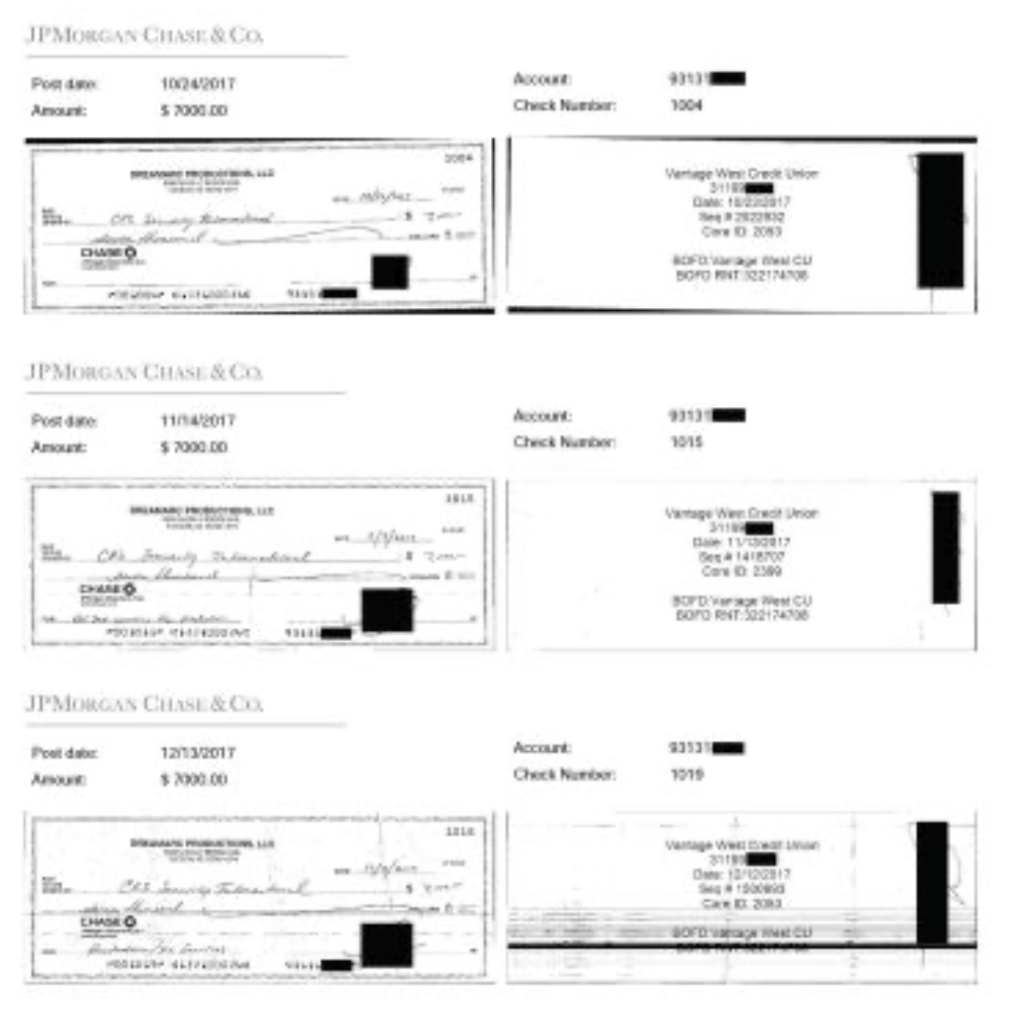
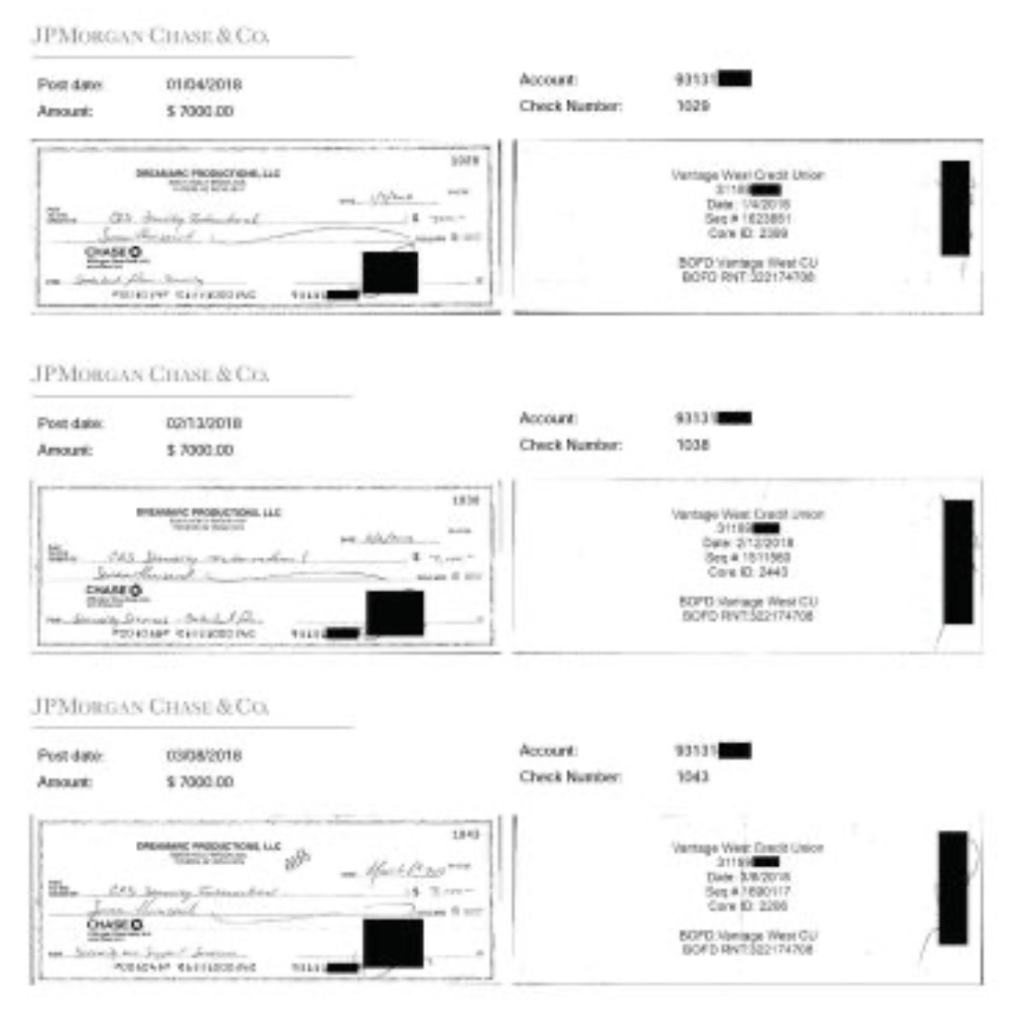
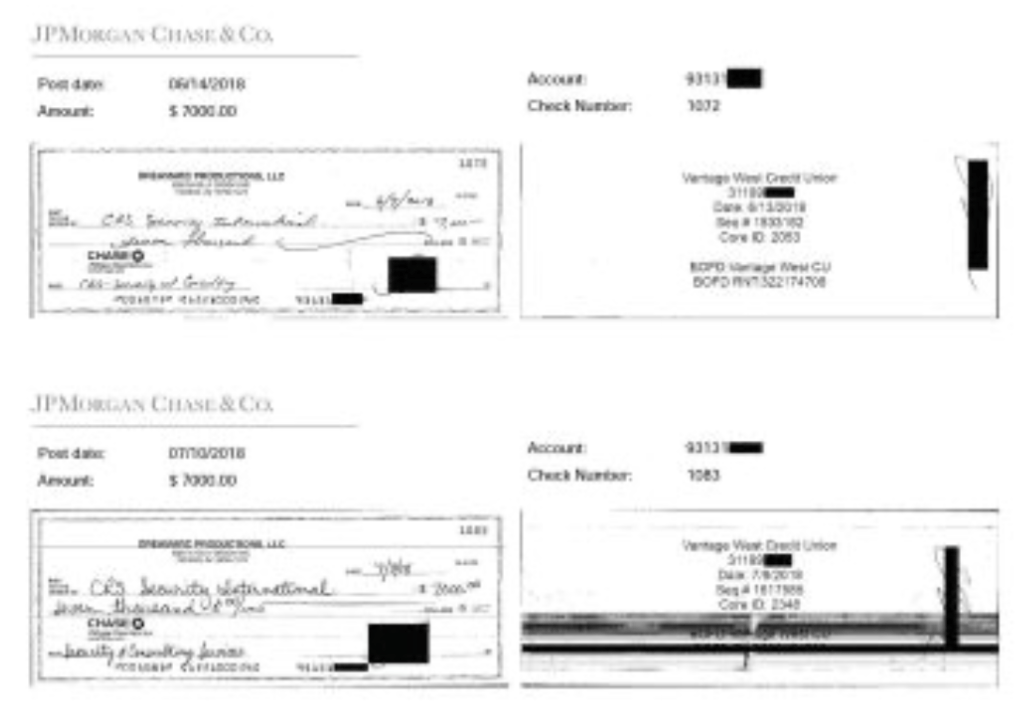
Craig Sawyer defrauded fake charity of $11,000 per month

Here is my 2018 article that exposed Craig Sawyer for running a fake charity & spending the money for drugs, Nascar adventures, and Vegas whores. This information was released to me by his assistant, Lori, who did the actual child rescues.

SHOCKING EVIDENCE CRAIG SAWYER DEFRAUDED V4CR OF 11K PER MONTH

Published on December 12, 2018 by Fiona Barnett

I copped a lot of crap for exposing Craig Sawyer 6 months ago. David Shurter copped a lot of crap before me, for calling him out in 2017 when Vets for Child Rescue (V4CR) was first launched.

Well, I finally obtained the irrefutable evidence of Sawyer’s fraudulent and highly lucrative child advocacy business. Multiple former V4CR staff have blown the whistle on Sawyer’s crimes. And I mean crimes. Sawyer is only licensed to gather donations to his not-for-profit in 5 USA states. Yet he collects moneys from multiple states in which he is unregistered, and in which he is legally mandated to register. His latest target was Idaho.

Craig Sawyer conned approximately $80,000 per month in donations from what he called “uneducated $5 a month donors”. But we wouldn’t know the true figure because Sawyer never kept the mandatory paperwork. V4CR kept no records of donations nor expenditure, no minutes of Board meetings – nothing. His recent tax return documents were fabricated.

Sawyer owes money to his employees, and this is why his promised film ‘Contraland’ was never released. He owes $10,000 to the Detective he hired to plan and execute all of the 14 stings. He owes $45,000 to the staff who produced the film. Another reason the film will never be released is the detective withdrew the right to display her image in the film. Since she did all the stings, and her image featured throughout the film – this means there is zero film. Sawyer made out that the ‘Contraland’ film was going to be released by Netflix. This is another deception. Netflix were not involved.

Sawyer blamed staff John Jacobs and Christian Caballero for the ‘Contraland’ film not being released. He publicly accused John Jacobs of embezzlement, something he wrongly accused his original CEO Jill Trammell of when she chose to resign from V4CR. Yet there may be some truth to the accusation against John Jacobs who himself is a shady character. Jacobs and his wife were apparently fired from his step-mother’s business for embezzlement. Jacobs is the one who insisted Craig Sawyer retract his public declaration that a homeless vets support charity called VOP stumbled upon in the Tuscon AZ desert. This is because Jacobs is heavily involved in politics, and is close with Tuscon Mayor Jonathan ROTHSCHILD of the child trafficking dynasty.

Sawyer told a lot of lies. Sawyer lied about the rescue of children. The so called rescue of Allison (prostitute street name ‘Candy’) was not a child rescue. Allison was 17 years old when Tressa Sawyer dumped her on the V4CR Detective Lori and her husband Bill (who was wrongly called a ‘pedophile’ by V4CR for speaking out about Sawyer’s fraud). Tressa used the excuse that she already had one crazy teenager to deal with a couldn’t handle another. After Allison nearly destroyed Lori and Bill’s house ($3,500 worth of breakages) and relationship, and once she turned 18, Allison returned to her 32 year old child trafficking pimp named Richard James Allen. V4CR then supplied donated money to one Grace Tang, to house Allison and her 32 year old pimp in a motel.

Sawyer lied about his daughter Aspen being the reason for V4CR’s formation. V4CR were in fact way into their initial stages by the time of Aspen’s alleged assault.

The Sawyers are drug traffickers. Tressa supplies drugs she obtains from Mexico, to her friends and to V4CR staff – even if they don’t want them. V4CR Board Meetings were pot smoking gatherings in which Aspen joined. Aspen is a drug mule. She was in the wrong place at the wrong time, hanging out with drug dealers and gang members. She often disappeared to California for weeks at a time. Aspen started off as a straight A student, but she went off the rails after Tressa forced her to undergo a nose job, after telling her she wouldn’t get anywhere in life without one. And it didn’t help that Craig Sawyer beat her, as she posted on Facebook. Sawyer is a steroid user and the family dog is visibly terrified of him. Staff witnessed his bursts of roid rage.

The donations provided to V4CR were not spent on rescuing children. They were spent on the Sawyers who had no alternative means of income. Tressa makes almost nothing from her real estate work. The family lived the high life on V4CR donations. Craig personally took $11,000 per month from V4CR donations, on top of all the extras V4CR donations paid for. V4CR donations paid for the Sawyers to attend sporting events and gun shows all over the USA. For example, Craig and Aspen Sawyer flew to Dover and to Martinsville for Nascar events, on October 6 and 21. They attended another Nascar event in Phoenix AZ. Worse, a party of 6 people (Craig, Tress, Aspen, Aspen’s boyfriend, TJ Smith, plus some random brunette friend) flew to a Louisiana State University Game. During his trips away, Craig has sexual affairs with Blonde Barbies. With the knowledge of staff members including Jeannette Carlisle, Craig hooked up with a Barbie lookalike named ‘CJ’ at an NRA show in Atlanta in 2017, and with another at the Vegas gun show.

Here is some evidence of Craig Sawyer’s fraudulent activity:

2018 trafficking: CIA, Sawyer, Clintons, NSA in AZ

Here’s my 2018 article that captured my year-long investigation & involvement in exposing a child trafficking operation on the Arizona border. I managed to get the low levels to turn on & expose an NSA agent! The NSA & Sawyer were later involved in Isaac Kappy’s ‘suicide’ in Arizona.

Deep State Shills Dropping Like Flies

by Fiona Barnett on October 6, 2018

Well, well, well… Look at the Luciferian Left shills getting exposed. It takes a victim of CIA child trafficking to untangle the web of CIA shills employed to cover up the Tuscon Arizona child trafficking operation for the Clinton Foundation, John McCain Foundation, and Tuscon Mayor Jonathan Rothschild (of the world ruling Luciferian dynasty) who are the ultimate benefactors of child trafficking which the CIA coordinates as a single, integrated world operation. An estimated 10,000 kidnapped children were being trafficked per year between the USA and the satanic MS-13 cartel in South America, via land routes owned by Native Americans, corrupt ranch owners or renters (like KYLE CUTRELL), and Cemex cement, before a bunch of volunteer welfare workers stumbled upon a child sex trafficking holding camp near Tuscon, AZ.

Let’s take a look at the CIA child trafficking shills that have been outed recently, no doubt thanks to the public’s prayer efforts:

1. Gabe Hoffman

Woah, this was a goody. We uncovered spectacular evidence that Gabe Hoffman and his lame ‘An Open Secret’ child abuse film are shitty CIA fronts. In 2015, Gabe Hoffman threatened to sue one of the victims for outing Hoffman and his film as a fake. Here’s the lawyer’s letter in all it’s glory:

Sorry, as I pause to crack a beer…

Hoffman is associated with the following sewer rat:

2. Craig Sawyer

In mid-2017, outspoken SRA victim David Shurter outed Craig Sawyer as a fraud, after seeing Sawyer appear with fraudster Russ Dizdar on fraudster Doug Hagmann’s CIA front conspiracy show. Shurter outed Sawyer for asking the public to send him cheques to finance the multi-millionaire’s CIA front V4CR. In response, Sawyer did a Gabe Hoffman and threatened to sue Shurter for slander using the donated funds.

Here are David Shurter’s articles from mid-2017 concerning Craig Sawyer:

  1. https://davidshurter.com/2017/07/09/a-transcript-of-my-video-on-craig-sawyer-that-was-removed-today-an-hour-after-posting/
  2. https://davidshurter.com/2017/07/09/a-threat-from-craig-sawyer-on-facebook/
  3. https://davidshurter.com/2017/07/08/craig-sawyer-our-new-hero-is-just-like-the-rest-fake-as-fuck/

This is Craig Sawyer’s original wikipedia entry which he has since edited to hide his connection to notorious child traffickers Hillary Clinton and John McCain.

“After his military career, Sawyer has run specialized teams to provide security to politicians and dignitaries including Hillary Clinton, John McCain, Donald Rumsfeld, and John Negroponte.”

This explains why Craig Sawyer covered up the Clinton / McCain / Rothschild child trafficking route in Tuscon, AZ.

Craig Sawyer’s original wikipedia entry said: “Sawyer is also a local motocross racer and local Las Vegas champion. He was also selected by Maxim as “Maximum Warrior.” That’s interesting coz, despite his $20 million empire, Craig Sewer hasn’t rescued a single child – BUT, he pumped public donations into – NASCAR!

3. Melissa Zaccaria (aka “HoneyBee”)

For starters, “HoneyBee” is an MK-ULTRA term that victims like me reeeeeally find suspicious.

Melissa Zaccario chose an apt nickname because her role is to use sickly sweetness to lure us into believing the CIA lie that Craig Sawyer’s a hero. Hence the saying, “catch more flies with honey than vinegar.”

When Shurter outed Craig Sawyer as a fraud mid 2017, HoneyBee tried to friend him and convince him that Craig was a nice guy. She did the same thing to me a few months ago when I started outing Sawyer. I immediately detected her manipulative ways which did nothing but anger me and make me suspect her as a shill:

And boy was I right! Turns out, Melissa Zaccaria is a member of the notorious GAMBINI Mafia Family who specialize in heroin trafficking and producing child rape material. Let’s look at what HoneyBee’s relative-by-marriage, Michelle, says about this fraudster:

“The Bee is the same chick that works with Sawdust. The dirt I have on Bee is that she is cousin to Andrea Costello Dagger [the woman who stole Michelle’s kids]. Andrea is married to my first cousin Richard Heimburger. Her uncle by marriage is Dr. Peter Favaro of Port Washington, NY. Dr. Favaro is an internet legend. He created the first online game called “alter ego”. He is Gambino mafia originally from Howard Beach, NY. Peter Favaros cousin John FavarA lived on the same block as head boss John Gotti. One day while driving down the block FavarA struck and killed John Gottis youngest son. Not long after Gotti had FavarA killed. Peter Favaros family left for California and changed their names to FavarO. 25 years later Peter Favaro returns to NY. He hooks up with his cousin Dominic Gasparro who is a ny city administrative judge. They hatch a plan to start a fathers rights movement in family courts. Which is how they target many of the children they traffick. Bee knows this. Because that is what Gambino are known for child porn and heroin. The new generation of Gambinos are all highly educated especially with computers. Involved in the arts. Politics.”

Here is a photo of HoneyBee’s Gambino Mafia relative:

4. Corey Lynn (aka CoreysDigs)

And while I’m at it – let’s out this one too. She posts a couple of flag and prayer emblems – and hey presto! Thousands of Christian Patriots are conned by the Luciferian Left.

Here is communication between Michelle (the mom of child trafficked kids) and so-called victim advocate Corey Lynn who promised to help Michelle expose her child’s perpetrators. But Corey pulled out AFTER she obtained all of Michelle’s story. Tut, tut… Another information gatherer who is friends with the other CIA information gatherers.

Corey recommends Doug Hagmann, a JESUIT who trained with the 300 priests recently outed for raping 1000 kids in Pennsylvania. Hagmann’s alternative media conspiracy show is just another fake CIA front used to control the child trafficking narrative and prevent victims like me from having a voice. They NEVER interview real CIA child trafficking victims or whistle-blowers – just CIA fakes Russ Dizdar and Craig Sawyer.

5. National Guard assisting Tuscon, AZ child trafficking Cartel

Oh, but I’ve saved the best ’til last! Thank God for exposing these evil bastards. We prayed the KRAUSE Cartel would implode – and the Lord answered our prayers.

National Guard employee Rachel KRAUSE and her “Law enforcement” husband Keith KRAUSE are self-confessed Luciferians who, along with their anti-American traitor gang, committed multiple crimes in their victimization of volunteer veteran soldiers who are trying to stop the Tuscon, AZ child trafficking route. Here are just some of the crimes these maggots committed:

  • Slashed car tires,
  • Fired weapons at volunteers,
  • Made false reports to CPS that the volunteer veterans were abusing their kids, such that one child was sent to Alaska,
  • Stole the casket flag of a war widow (KYLE CUTRELL did this, the same one who brought false charges against Lewis),
  • Tormented a double amputee veteran to suicide.

Here’s Rachel Krause’s reference to the double amputee war veteran’s suicide attempt:

Here’s a photo of ‘Law Enforcement Officer’ Keith KRAUSE with the stolen war veteran’s flag – as Rachel Krause boasts about it online:

Since we started outing these evil bastards – they have turned on each other. Grab a cuppa tea and I’ll explain how this satanic soap opera began:

So, Cassie was Rachel Krause’s side kick who was as evil as Rachel in all she did. Cassie is the one who lodged false CPS claims with Rachel Krause on Lewis and Flora.

John Jacob (“Jayjacob”) is the dude in the fake red beard who did all the parody videos of volunteer Lewis, with Rachel Krause flaunting the stolen soldier casket flag:

John Jacob is the boyfriend of Ashley Walling, whose husband was murdered last year. Ashley has a 10 yo daughter from her marriage to the now deceased dude. Here’s a photo of Ashley and John Jacob (I could have posted the 10 yo daughter too, as they did to my Aussie mates, but I’m not that low):

John Jacob, the pedo protecting scumbag behind the beard, and his witch-eyed beau…

Rachel Krause and Cassie mocked Ashley’s 10 yo daughter online, and posted a photo of the man who murdered her father, as described here by Ashley:

In retaliation, John Jacob began outing Rachel Krause’s cartel and their criminal actions. Cassie’s husband threatened Jacob. So, Jacob went to town.

Jacob works next to a military base. Rachel Krause showed up at the Base’s security and flashed her NATIONAL GUARD IDENTIFICATION to the security guards – who basically told her to piss off. Rachel Krause then she attended the local Sheriff to lodge a complaint of harassment by Jacob – but the cops told her to piss off. Then Rachel Krause attended the court house to obtain a restraining order against Jacob – but they told her to piss off also. That’s my interpretation of the story. Here’s Jacob’s account:

Rachel Krause is obviously confident that she has held some kind of power over others – the kind of confidence that stems from working for the Deep State.

Things got uglier. JayJacobs then outed Cassie for the long-term affair she’s been having with some lucky bloke:

Consequently, Cassie is reportedly suicidal – just like the double amputee veteran she harassed to suicide. Cassie took down all her troll accounts. Cassie’s cousin April then represented Cassie on Facebook, to try and get the former Krause cartel to stop attacking Cassie.

So, the whole of Rachel Krause’s cartel have abandoned her – except LEON JAMES (aka “Angel” on social media). Leon James is the one who composed all the death threats against veteran volunteers, which were sent from Rachel Krause’s accounts. Here’s a photo of bat-shit crazy “Angel”:

Leon James looks up to Rachel Krause like a coven slave would:

Rachel Krause pulled down her own pages, but she and Leon James continue their paid trolling work form other accounts. They seem to be paid by the government for their work to support the child trafficking cartel. The others were all volunteers who were sucked into Rachel’s gang.

These people are reaping what they sow. They sure dished it out – but can’t handle being hit with a fraction of the evil they committed against innocent volunteers trying to stop a vile foreign cartel from trafficking and murdering kidnapped USA kids.

Rachel and Keith KRAUSE ought to be reported to every relevant authority, and stripped of their positions with the National Guard.

______________________________________________

Update: Gabe Hoffman attacked Marianne Barnard for blowing the whistle on her VIP perpetrators:

_________________________________________________

Updated update:

‘Christian’ Joe Hagmann killed himself with heroin…

Why Ketamine is Dangerous to SRA-MK Patients

What if ketamine triggers dissociated memories of trauma events?

Open-label ketamine trials and research studies are currently active or recently completed in Australia. These focus on PTSD, depression, suicidality, and addiction. Developmental trauma can underlie these mental health disorders. Rationale for open-label ketamine trials over double-blind administration includes greater informed consent, improved efficacy, and greater safety. Yet, ketamine administration to subjects with extreme trauma and dissociation histories may be unsafe due to potential state-dependent effects. Here is a summary of some relevant factors:

  1. PTSD subjects may possess more complex trauma histories than initially indicated. Severe trauma events underlying PTSD can include drug administration paired with torture and/or near-death experiences.
  2. The full ways Ketamine acts are not yet completely identified, especially on opioid receptors . Ketamine effects are varied and dose-dependent, plus subjects possess unpredictable drug-sensitivity levels.
  3. State-dependent learning phenomena determine that drugs can place subjects in altered states of consciousness (ASC). Once sober, subjects forget what occurred during the drug-induced ASC but recall these state-dependent memories when returned to the same state. Information transfer can occur between drug-induced states that share similarities.
  4. Ketamine in subanesthetic doses can induce ASCs. The relationship between ketamine and dissociation is unknown.
  5. Ketamine’s effects resemble PTSD symptoms of dissociative flashbacks, hypervigilance, intrusive thoughts, and unwanted memories. Ketamine’s sympathomimetic effects resemble PTSD sympathetic hyperactivity (as indicated by elevated heart rate, blood pressure, and sweating). These effects could be generalised to trigger trauma event flashbacks.
  6. Heart failure features autonomic NS imbalance, with increased sympathetic activity and decreased parasympathetic (vagal) activity. The vagus nerve regulates the interaction between emotion and the heart, lungs, and stomach. It specifically influences left ventricular function, mainly by regulating heart rate and contraction. Extreme threat is known to trigger vagal ‘collapse’ as indicated by plummeting vital signs.
  7. Extreme emotional stress can cause sudden heart failure. The main indicator of this ‘stress (Takotsubo) cardiomyopathy’ condition is abnormal activity in the left ventricle. Cases of Takotsubo cardiomyopathy following subanesthetic-dose ketamine administration are documented. Researchers note that Ketamine’s sympathomimetic effects could theoretically induce stress-related cardiac dysfunction, including cardiomyopathy.

It is hypothesised that low-dose ketamine administration to PTSD test subjects could trigger extreme trauma event memories acquired during drug-induced dissociative states. Ketamine administration to victims of ritual abuse and mind control whose programming was laid via drug administration coupled with multiple near-death experiences could prove fatal.

© Fiona Rae Barnett

Britney Spears Exposed her Disney MK-Ultra Abuse

Remember when Britney Spears shaved her head? This is a common MK-ULTRA programming response. It is an act of defiance against the victim’s MK abusers, and done in lieu of self-harming. I know because I used to do the same.

On Sunday 6 March 2022, Britney Spears posted to Instagram the following description of her MK-ULTRA abuse experiences. In her post, Britney also made reference to Australia and Israel. Her post was deleted the following day. Britney’s post said:

In a world where it’s okay to lock your daughter up and make her work 7 days a week … 8:00 am to 6:00 pm … no days off … 105 people are in and out of a small trailer home 🏡 weekly … No private baths 🛁 … seen naked when changing … drugged … can’t even speak or talk … has to be available to the treatment people and show up every day for 10 hours a day … if not will have to stay longer … never given a date on when you can leave … 9:00 pm bed every night … like 8 gallons of blood weekly … this happened to me for 4 months after I worked for my dad and my family for 13 fucking years … I gave my all when I worked only to be literally thrown away … I was nothing more than a puppet to my family yet to the public I just performed on stage and did what I was told to do … but it was worse than that because it was accepted and approved by the people I loved the most 💔 … Looks are deceiving …. I must have it nice on vacations lol !!!! After 13 years damn straight I should go !!! I was treated less than, demoralized and embarrassed … nobody should ever be treated the way I was …. The reason I bring this up is because ending the conservatorship is a huge deal but come on … THAT’S IT ??? They all got away with it !!! If you’ve ever been in shock 😱 for 4 months … threatened for your life … you would be upset too … I’m not done … I want justice and won’t stop until something is done to those who harmed me … and YES I was harmed !!!! This is a message to all who have been threatened for their life … You are NOT ALONE !!!!

Search engine indicates the now deleted Instagram post existed.

Proof Fiona Barnett Ended Nicole Kidman’s Pedo Papa

Here are a couple key documents showing a direct link between my notification against my pedo-rapist Dr. Antony Kidman on 7 August 2014, and his death 36 days later on 12 September 2014.

Nicole Kidman’s own security team told the Australian press that Kidman had been placed on immediate suicide watch following my notification, and that his daughter Nicole Kidman had adopted a “Scientology approach to managing Fiona.” This approach included hiring mercenaries to stalk, tailgate, & harass me. There have been a series of death threats against me and my family, and attempts on my life.

Here is the letter from the NSW Psychology regulatory authority acknowledging receipt of my notification against Antony Kidman to Australia’s federal health practitioner regulatory authority called AHPRA.

And here is the notice from the NSW Health Care Complaints Commission saying the case against Dr Antony Kidman was closed because he had died mid-investigation.

Antony Kidman & Nicole Kidman

How Fiona Barnett Treats Trauma & Dissociation

This article will provide a brief overview of what a decade of effective therapy taught me about treating trauma and dissociation. These methods are not taught in university mental health training programs. Here is the understanding I synthesised from many years of university study, a decade of intense and productive therapy, and my memories of being a victim of extreme abuse at the hands of secret societies and military intelligence. This encompasses MK-Ultra, MK-Delta, ritual abuse, and mind control.

Trauma-Based Forced Dissociation

I coined the term Trauma-Based Forced Dissociation (TBFD) in 2019 to describe the conditioning stemming from ritual abuse and mind control techniques that the military and secret societies perpetrate against child subjects. Underpinning my proposed diagnosis of TBFD, my Dissociation of Learning Trauma Model explains the neurobiology of trauma and dissociation.

TBFD is systematically induced in the developing brain via applied classical and operant conditioning, and attachment theory. A standardised protocol of unethical hypnosis, sensory deprivation, torture, spinning, psychopharmacology, and rape is applied to the child from the earliest age. This creates a complex system of physically compartmentalised memories, experiences, personality traits, and abilities that may be triggered on command.

TBFD is distinct from recognised psychiatric diagnoses contained within the DSM and ICD. DID or Complex-PTSD typically organically result from repeated extreme developmental trauma events. It is normal for the brain to dissociate, repress memory, and fragment under sufficient stress. The result is a relatively small system of dissociated parts. 

The military industrial complex studied this natural dissociation phenomenon under laboratory conditions, via MK-Ultra scientists, and weaponised it into the Western child soldier program called MK-Delta. Unlike DID, TBFD is a manufactured system of potentially hundreds and thousands of dissociated parts designed to perform certain tasks.

Military and esoteric understanding of brain anatomy and physiology differs from what is taught in modern psychology, psychotherapy, psychiatric, and even neuroscience training programs. The answers to what was done to military child victims, and how to undo the damage, are found in decades old, military-funded research publications. That research focused on hypnosis and psychedelics to begin with. It soon incorporated decades of studies into hemispheric lateralisation, sensory deprivation, mental imagery, EEG readings of brain activity, neurofeedback, electrocution, sexual perversion, and torture.

Dissociation of Learning Trauma Model

My theory underpinning TBFD is steeped in decades old state-dependent learning research. State-dependent learning was originally called “dissociation of learning.” It describes a phenomenon where whatever happens whilst in a dissociative state (altered state of consciousness) will be forgotten until the subject is returned to that original state.

Understanding this requires a fundamental comprehension of hemispheric lateralisation. Knowledge of hemispheric lateralisation is also essential to understanding the neurobiology of trauma and dissociation and why certain therapy techniques work. 

The brain is divided into two halves – the left and right hemispheres – that are joined via a massive bundle of neurons called the corpus callosum. Each brain hemisphere performs different tasks and stores memory differently. The left side is auditory-sequential, is involved in simple language and math tasks, cannot process empathy, and anger is its only emotion. The left relies on repetition, or rote learning, for knowledge and skill acquisition. The left brain is verbal and gives context (a time, date, place stamp) to experiences, resulting in conscious or explicit memories that you can verbally and freely discuss. Importantly, the left brain is responsible for critical judgement and comparing sensory data against existing memory banks.

The right hemisphere is visual-spatial and responsible for more complex language and math tasks. The right brain prefers a wholistic, visual, and emotionally and somatically engaging approach to learning. The right brain also processes information inter-dimensionally. It learns and stores memory implicitly, at a non-conscious level. Hence the right brain is the seat of classical and operant conditioning, and it responds to subconscious cues or triggers like the smell of food, or the infamous Jaws movie score. 

Military researchers referred to the left as the ‘dominant hemisphere’ and the right as the ‘non-dominant hemisphere.’ This is because during everyday normal activity the left brain is dominant while the right hums in the background. But that does not mean the right hemisphere stops functioning in its non-dominant state. It simply continues operating below the surface of consciousness. There, fuelled by emotion, it overrides conscious will and executes conditioned responses. Thus, fear of spiders, and emotional overeating will defeat reasoning every time until their triggers are exposed and extinguished.

During trauma events, the amygdala fear response is hyperactivated and the hippocampus suppressed. Trauma-experience sensory input bypasses left-brain contextualisation and is stored indefinitely as raw sensory data in the right hemisphere – like undigested food particles. When the trauma victim encounters a reminder of their trauma, this triggers a flashback, or a sensory re-experiencing of the incident. The person’s left brain will search the immediate environment for the source of the sensory input, and mistakenly time-place-date stamp that as the cause. So, the left brain falsely identifies a barking dog, nagging spouse, or yelling kids as the source of irritation.

Certain stimuli can bring the right hemisphere into dominance. There exist two types of arousal methods: high versus low. High arousal methods overwhelm the nervous system; these include being yelled at, verbally abused, loud rock music, religious revival meetings, torture, tribal dancing to loud drumming, and discordant music. Low arousal methods include hypnosis, trance, the twilight state, low chanting, low rhythmic drumming, and visualisation.

These low and high arousal methods induce an altered state of consciousness. Therefore, an ASC occurs when the right hemisphere is made dominant. The more the right brain comes forward and the left is suppressed, the deeper the ASC. Hooking a subject up to an EEG machine enables the observer to determine which state of consciousness the subject is in.

Our brainwaves can fire at different speeds depending on how alert we are. These firing rates are categorised, from slower to faster, as Delta, Theta, Alpha, Beta, and Gamma. Beta characterises a normal alert state. The slower the brain fires, the closer the brain moves toward a trance state, or an ASC. Alpha serves as the gateway to a trance state, induced in the therapy setting by progressive muscle relaxation and deep breathing. Theta indicates a trance state, while Delta is indicative of deep trance.

To access memories stored in the implicit (unconscious) memory system, and process trauma memories, a number of things must occur, including the following:

  1. The right hemisphere must be made dominant, and the left’s critical thinking capacity be suppressed.
  2. The hippocampus must be stimulated, so that the raw sensory data can be contextualised by the left brain before being stored into long-term conscious memory. 
  3. The memory engram must be activated or triggered, which may occur by simply discussing it.
  4. The trauma memory must be sufficiently activated; this is achieved by simultaneously engaging as many of the sensory modalities that were activated at the time of the trauma event.
  5. The emotion must be stripped from the trauma memory.
  6. A novel learning (aka, a prediction error, or an element of surprise) must occur during processing of the trauma event. This might entail realising a surprising fact about the situation, like the child was not responsible for what happened. Or the client might visualise a different ending to the trauma event that completes whatever action the victim wishes they could have achieved at the time of the trauma experience.  

Therapy techniques capable of facilitating this process include:

  • Hypnosis
  • EMDR
  • Clay Field Therapy
  • Art Therapy
  • Guided visualisation
  • Neurofeedback
  • Somatic therapies
  • Brain-spotting
  • David Grande’s bilateral music.

The Safe and Sound Protocol can be a useful adjunct. This basically works by tightening the eardrum so that the brain shifts focus from low frequency predator sounds to being able to detect the high frequency sounds of voice prosody characteristic of, say, a soothing mother’s voice.

It is more effective to combine several of these modalities at once. For instance, after 10 years of engaging in these therapies, I achieved the final phase of parts-integration during a single therapy session in which I combined EMDR, Clay Field Therapy, bilateral music, and eyes-closed visualisation.

This summary is from my book, THE FIGHT TO REMEMBER: Trauma-Based Forced Dissociation & the Western Child Soldier Program, that I have been writing.

© Fiona Rae Barnett (10 March 2026)

Unnecessary Evidence

I have come under an orchestrated series of threats and attacks for exposing my Nazi step/grandparents Peter and Helen (aka Helena) Holowczak and their MK-Ultra pedophile connections. One of these attacks was launched by low-IQ cult scum who tried to discredit my testimony by saying my family are not related to Helen Holowczak. Their main source of ‘evidence’ is my grandmother’s gravestone which excludes the names of my father and his children. So, here a few documents to disprove their lies.

Firstly, my father Mitek Frank Holowczak was cut out of his mother’s will at the last minute by his two half-brothers. He went to court and won his share of Helen Holowczak’s house at 14 McAlister Avenue. The brothers told the courts Helen’s house sold for 500k, when in fact it sold for 600k. So my father was further done out of a third of the difference.

Not surprisingly, my father and his seven children were not listed on Helen’s gravestone, since the two half-brothers are the ones who arranged the funeral and the headstone. Duh.

So, here is evidence that my father is Helen Holowczak’s son, that he resided at 14 McAlister Avenue Engadine, and that David and John Holowczak are indeed his half-brothers. (Click on the photos for a closer view.)

  1. This is the electoral roll record stating Helen and Peter Holowczak lived at 14 McAlister Ave Engadine in 1977.

2. Here is my father’s Australian issued birth certificate. Helen lied to my father about who his real father was, and he first discovered the truth when he was 40 years old. My father subsequently obtained his original birth certificate from Germany which records Mitek Rylko as his father.

Mitek Frank Holowczak’s birth certificate

Note the Holowczak’s family address on my father’s Australian birth certificate is recorded as 14 McAlister Ave, and his mother is Helen (Helena) Holowczak, nee Milewska.

3. Here are photos of my father as a baby and toddler with his ‘mother’ Helen (kidnapper?) and pedophile step-father Peter Holowczak, in the refugee camps:

4. Here is a photo of my father seated with his mother Helen Holowczak, and half-brother David Holowczak at my childhood home in Terranora:

5. Here is a picture of my father visiting his real father, Mitek Rylko (after whom he was named), and one of his half-brothers, in Poland:

6. Here is a photo of me posing with my real grandfather in Poland in 1990. Respected anti-Nazi WW2 soldier.

7. And here is a picture of me, my siblings and parents at my brother’s wedding in 1996 (I am bridesmaid), plus a photo of my father with his second half-brother in Poland:

8. And of course there are the emails and voice recordings John Holowczak got reprimanded for. He sent them to my IA editor David Donovan from his Wollongong Council work email system. Albeit as defamatory and creative as the latest attack on my credibility, in these my half-uncle admits to being related to me, names my family members, and admits to my telling him at a family meeting in 1991 that I was raped by Peter Holowczak as a child:

Incidentally, this is the same Wollongong Council that trafficked kids, and whose mayors and their fellow perpetrators were ritually murdered by their former victims: https://www.illawarramercury.com.au/story/4080542/crime-files-cop-recalls-every-detail-of-gruesome-murder-scene/

Next time, put your efforts into researching who John and David’s real fathers are, because – like John and David told my family and I during the meeting in 1991 – it wasn’t Peter Holowczak. At least my father found his real father. Mitek Rylko was a handsome, intelligent, respected member of the community, who didn’t rape and kill kids, and who fought for the resistance instead of slaughtering Christians, Jews, and disabled kids in the concentration camps. His father was a violin teacher, and that’s where my father and siblings got our musical brilliance from.

Research hint: Nanna always named her kids after their fathers. Since John Holowczak is the only bald, ginger-headed member of the family, start looking in the direction of the Scottish dude named John Vicars who ‘supervised’ Helen at the Marrickville woollen mills. And as for David, Helen was going to name him ‘Romance’ – so good luck finding that one. Nanna was a notorious Nazi whore who regularly attended those famous migrant orgies.

If only I weren’t related to the vile Holowczaks! As you can see surmise, my father inherited his high IQ from Mitek Rylko.

This is the last time I respond to this dumb shit. Anyone who attacks me has a vested interest in covering up ritual abuse and child sex trafficking.

PRINCE ANDREW & NICOLE KIDMAN: 1999 Child Abuse Charity Work

Prince Andrew was Chairman of the NSPCC’s (National Society for the Prevention of Cruelty to Children) FULL STOP campaign, with benefactor Nicole Kidman in 1999. Nicole Kidman is referenced 66 times in the Epstein files.

There are 66 references to Nicole Kidman in the Epstein files. Here is an email exchange dated 2010, two years after Epstein was convicted of soliciting a child. The sender tells Jeffrey Epstein: “I’m with Nicole now,” to which the convicted pedophile responds: “Call me.”

The Tom Barrack Connection

A particularly revealing email chain from October 2010 shows billionaire Tom Barrack writing to Epstein: “U and I need to talk about Nicole!!! I am just being smart and considerate of her! Where r u tomorrow! I am in Dubai” []. This suggests discussions about Kidman were occurring between Epstein and Barrack,